U-Codes: CAN Bus Communication Faults Explained (2026 Pakistan Guide)
2026-11-27 10:06:37 · by MS Auto Tools
A customer brings in a Toyota Corolla with the check engine light on, the ABS light on, and dashboard warnings that make no sense together. Your scanner reads U0100, U0121 and U0155. These are U-codes, and they mean something very different from the P-codes most workshops deal with every day. A P-code points to a faulty sensor or a bad misfire. A U-code means the computers inside the car have stopped talking to each other. In 2026, with even a Suzuki Swift carrying half a dozen control modules, U-codes are now one of the most common reasons cars land in Pakistani workshops with multiple warning lights at once. This guide explains what U-codes are, what causes them, how to diagnose them step by step, and which scanner actually finds them.
What Are U-Codes?
Every modern car has a network called the CAN bus, short for Controller Area Network. It is the wiring highway that lets the engine control module, ABS module, airbag module, instrument cluster, transmission module and body control module exchange information hundreds of times per second. Diagnostic trouble codes are grouped by letter. P-codes cover the powertrain, B-codes cover the body, C-codes cover the chassis, and U-codes cover the network itself. A U-code is set when one module expects a message from another module and that message never arrives, arrives corrupted, or arrives too late. The code does not tell you a part is broken. It tells you communication has failed, and the reason can be anything from a dead battery to a cut wire to a failed module.
The U-code range runs from U0001 to U0315. U0001 to U0099 cover the CAN bus itself, including bus-off errors and wiring faults. U0100 to U0199 cover lost communication with individual modules. U0200 to U0299 cover lost communication with a second network of modules, and U0300 to U0315 cover software incompatibility between modules. In a Pakistani workshop, the codes you will see most often are U0100 (lost communication with ECM or PCM), U0101 (lost communication with transmission control module), U0121 (lost communication with ABS module), U0140 (lost communication with body control module), U0155 (lost communication with instrument panel cluster) and U0102 (lost communication with transfer case control module, common on 4x4 Fortuner and Revo). A single U-code can light up three or four warning lamps at once, which is why customers often think the whole car has failed when the real fault is one broken wire.
How the CAN Bus Works in Pakistani Cars
The CAN bus in cars like the Corolla, Civic, Swift, Sportage and Tucson uses two wires twisted together, called CAN High and CAN Low. Messages travel as voltage differences between the two wires, which makes the system resistant to electrical noise from the ignition and alternator. The network runs at 500 kilobits per second on most cars, fast enough for the engine and ABS to share wheel speed, throttle position and brake data in real time. At each end of the network sits a 120 ohm terminating resistor, so a healthy CAN bus measures about 60 ohms across the two wires at the OBD2 port. That single measurement is one of the most useful tests a workshop can do, and it takes less than a minute with a multimeter.
Newer cars add CAN FD, a faster version of the network that carries more data per message, and DoIP, which is diagnostics over the car's Ethernet network. A 2023 or newer Corolla Cross, Sportage or Tucson may use CAN FD for some modules, and an older scanner that only speaks classic CAN will connect to the engine but stay blind to half the car. If your tool cannot read CAN FD, it cannot properly diagnose the newest cars on Pakistani roads.
Common U-Codes and What They Mean
U0100, lost communication with the ECM or PCM, is the most common U-code of all. Causes include a blown ECM fuse, a bad ground, a weak battery, water in the ECM connector, or a failed ECM itself. On a Corolla or Yaris, check the EFI fuse and the ECM grounds first.
U0101, lost communication with the transmission control module, usually appears with harsh shifting or a transmission warning light. On a Civic with a CVT or a Corolla automatic, the fault is often a wiring problem at the transmission connector, or low battery voltage during cranking.
U0121, lost communication with the ABS control module, brings the ABS and traction control lights on together. Corrosion on the ABS connector pins is a common cause on cars that have been through flood water or deep monsoon standing water.
U0140, lost communication with the body control module, shows up as strange electrical behaviour: windows, central locking, lights or wipers acting on their own. Aftermarket accessories wired into the wrong circuit are a frequent cause.
U0155, lost communication with the instrument panel cluster, leaves the dashboard dead or showing wrong readings. The cluster is a module on the network, not just a display, so a cluster fault can set U-codes in other modules too.
U0001, high speed CAN communication bus fault, and U0002, CAN bus off, are network-wide codes. They mean the whole bus has shut down, usually because of a short between CAN High and CAN Low, a failed module flooding the bus with garbage, or a wiring short after an accident repair or tracker installation.
Symptoms Workshops See Every Day
A car with a U-code rarely has one clean symptom. The most common pattern is several warning lights at once: check engine, ABS, traction control, airbag and sometimes the power steering light, all glowing together. The car may start and drive normally, which confuses the customer, or it may go into limp mode with limited power. Sometimes the engine cranks but does not start because the immobiliser module cannot confirm the key with the ECM. On push-start cars like the Sportage and Tucson, a U-code between the smart key module and the BCM can cause a key not detected message even with a good key battery. Intermittent faults are the hardest kind. The car works fine in the morning, the lights come on after hitting a bump or driving through water, and by the time it reaches the workshop the fault has cleared and the code is stored as history only. That is why checking whether the code is current or stored matters so much.
Diagnosis Workflow: From Code to Cause
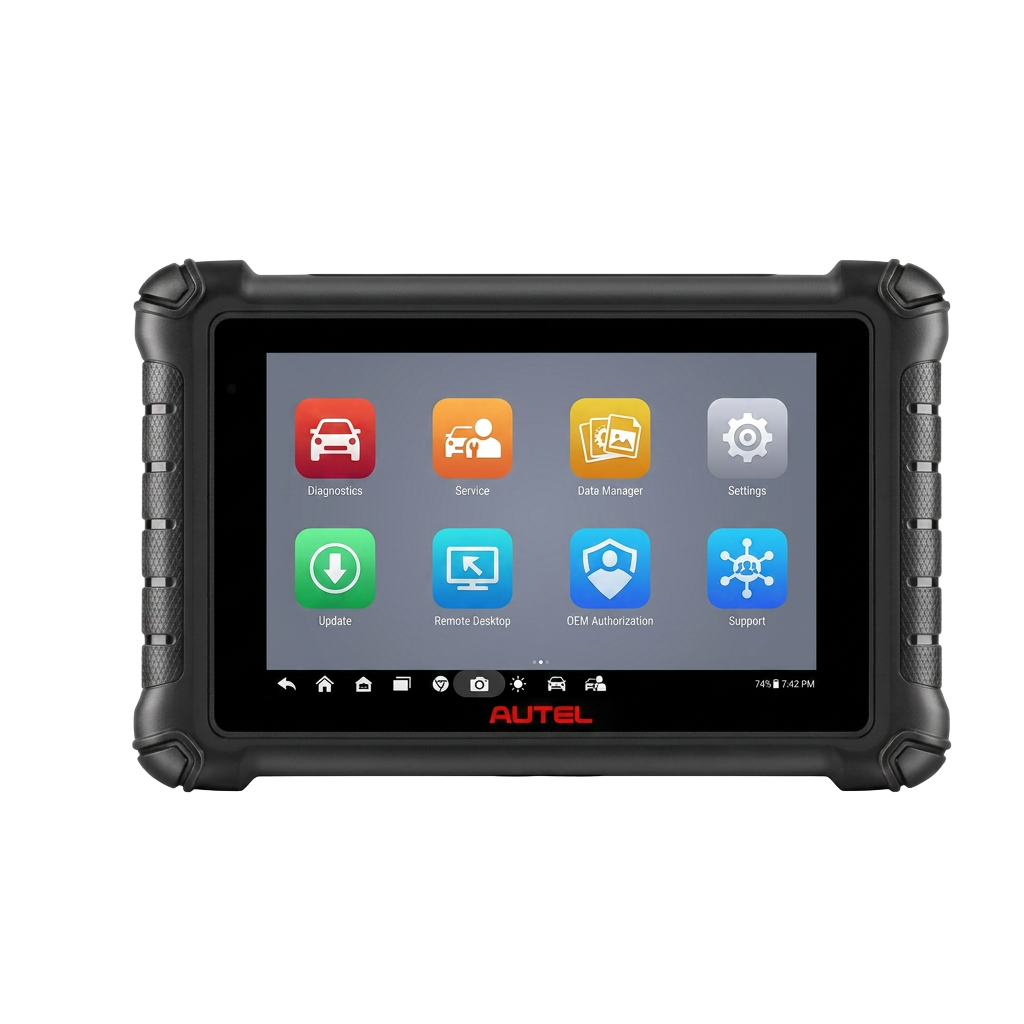
A proper U-code diagnosis follows a fixed order, and skipping steps is how workshops waste hours and replace good modules. The first step is a full system scan, not just an engine scan. A cheap code reader only talks to the engine, so it shows U0100 and nothing else. A professional scanner reads every module on the car and lists which modules answer and which do not. If every module reports lost communication with the ABS module, the ABS module is the suspect. If only one module reports the fault, the problem is more likely in that reporting module or its wiring. The Autel MaxiCheck MX900, at Rs 155,000, performs a full system scan with CAN FD and DoIP support, which is exactly what this job needs on 2023 and newer cars.
The second step is the battery and charging check. Low voltage is the single most common cause of U-codes in Pakistan. A weak battery drops below 9 volts during cranking, modules reset mid-conversation, and U-codes set in half the car. Test the battery under load, check the charging voltage at idle, and inspect the battery terminals and the main ground straps. A loose ground on the engine or the body causes U-codes that come and go with vibration, and it costs nothing to fix.
The third step is the CAN resistance test. With the battery disconnected, measure resistance between pin 6 and pin 14 of the OBD2 port. A healthy bus reads around 60 ohms. A reading near 120 ohms means one terminating resistor is missing, usually because a module is unplugged or its connector is damaged. A reading near zero means a short between CAN High and CAN Low. A reading of infinity means an open circuit, a broken wire somewhere in the harness. This one test narrows the fault to a section of wiring in minutes.
The fourth step is a visual inspection of connectors and wiring. Look for green corrosion, bent pins, water marks and loose terminals. Check the wiring where it passes through the firewall, under the seats, and near the battery. In Pakistan, two causes dominate: water damage from flooding or pressure washing the engine bay, which corrodes the ABS and ECM connectors, and aftermarket work such as a tracker, security system or amplifier tapped into the CAN wires. Any device wired wrong into CAN High or CAN Low can corrupt the whole network, and removing it often clears the fault instantly.
The fifth step is module-by-module isolation. If the bus is shorted, unplug modules one at a time while watching the resistance reading. When the reading returns to 60 ohms, the last module unplugged is the faulty one. Never replace a module before confirming its power, ground and CAN wiring are good, because a new module on a broken wire sets the same code.
The sixth step is software and configuration. Some U-codes, especially U0300 to U0315, mean a module has the wrong software or was replaced without coding. A second-hand ABS module or cluster fitted without proper programming will set incompatibility codes that no wiring repair can fix. A scanner with coding functions is needed here, and the MX900 covers service functions including coding on many makes.
If you need a professional scanner that reads every module, supports CAN FD and DoIP, and handles full system diagnostics on Pakistani cars, message MS Auto Tools on WhatsApp at +92 300 0678111. The Autel MaxiCheck MX900 is available genuine with warranty at Rs 155,000, and the team can confirm it covers your car before you buy.
Repair Costs in Pakistan
U-code repair costs vary widely because the fault ranges from a free fix to a module replacement. A proper diagnostic scan at a workshop costs Rs 1,000 to Rs 2,500 depending on the city and the scanner used. A loose ground or a corroded connector cleaned and resealed costs Rs 500 to Rs 2,000 in labour. Wiring repairs, including tracing a short and replacing a damaged section of harness, typically run Rs 3,000 to Rs 10,000. A used ABS module for a Corolla or Swift costs Rs 25,000 to Rs 60,000, plus coding, while a new ECM can cost Rs 80,000 to Rs 250,000 depending on the car. Flood-damaged cars are the worst case, because corrosion spreads through several connectors and the repair bill climbs with every module that needs cleaning or replacement. Always quote the diagnosis separately from the repair, and always show the customer the scan report. When a customer sees five U-codes and understands they all point to one broken wire, a Rs 5,000 wiring repair feels fair.
Tools That Actually Find U-Codes
A code reader that only reads the engine cannot diagnose U-codes properly, because it cannot see the modules that are not talking. A workshop needs a full system scanner with live data from every module and the ability to read CAN FD on newer cars. The Autel MaxiCheck MX900, at Rs 155,000, is the tool this guide recommends for U-code work: full system diagnostics, CAN FD and DoIP, active tests, and service functions including SAS, TPMS, DPF and injector coding. For a smaller workshop starting out, the Thinkdiag 2 at Rs 65,000 covers full system scans on most cars and handles common U-codes on models up to 2022, while the Launch DBScar VII at Rs 75,000 is a strong Bluetooth option with similar coverage. All three are available genuine from MS Auto Tools with warranty and after-sales support.
Warning: Counterfeit Scanners Make U-Codes Worse
Counterfeit and cloned scanners are a real problem in the Pakistani market, and U-code diagnosis is where they do the most damage. A clone Autel or Launch tool often ships with old software that cannot read CAN FD, so it shows a clean report on a car that actually has network faults. Worse, some clones send bad commands on the CAN bus during active tests and can lock a module or corrupt its software, turning a simple wiring fault into a module replacement. Buy only from an authorised seller, check the serial number with the brand, and keep the software updated. MS Auto Tools sells 100 percent genuine Autel, Launch, Xhorse, Thinkcar, OBDSTAR and XTOOL tools with warranty. A genuine MX900 costs Rs 155,000 and works on the day you buy it and every day after.
Preventing U-Codes in the First Place
Most U-codes are preventable. Keep the battery healthy and replace it before it gets weak, because low voltage is the top cause. Never pressure wash the engine bay directly at the fuse box, ECM or ABS connectors. When fitting a tracker or any accessory, use a proper installer who takes power from the fuse box, never by cutting into CAN wires. After an accident repair, make sure every ground strap is refitted and every module connector is fully seated. And keep the scanner software updated, because manufacturers add new modules and new codes every year. For workshops, the habit that saves the most time is scanning every car fully before starting work, so a stored U-code from an old fault is not blamed on the job you just did.
Frequently Asked Questions
What does U0100 mean on a Toyota Corolla?
U0100 means the engine control module has stopped communicating on the CAN bus. On a Corolla, check the EFI fuse, the ECM grounds and the battery voltage first. A weak battery or a blown fuse causes this code more often than a failed ECM.
Can I drive my car with a U-code?
It depends on the code. A stored U-code with no warning lights is usually safe to drive to a workshop. A U-code with limp mode, no start, or loss of power steering means the car should not be driven far. Get it scanned before deciding.
Why do several warning lights come on together?
Because the modules share data over one network. If the ABS module stops talking, the engine, transmission, cluster and traction control all report lost communication with it, and each one lights its own warning lamp. One fault, many lights.
How much does U-code diagnosis cost in Pakistan?
A full system scan costs Rs 1,000 to Rs 2,500 at most workshops. The repair depends on the cause: a cleaned connector can cost under Rs 2,000, wiring repairs run Rs 3,000 to Rs 10,000, and a replacement module costs Rs 25,000 to Rs 250,000 depending on the car and the module.
Do I need a special scanner for U-codes?
Yes. You need a full system scanner that reads every module, not a basic engine code reader. For 2023 and newer cars you also need CAN FD and DoIP support. The Autel MaxiCheck MX900 at Rs 155,000 covers all of this, while the Thinkdiag 2 at Rs 65,000 is a good budget option for older cars.
Can a tracker or CNG kit cause U-codes?
Yes. Any device wired into the CAN bus incorrectly can corrupt network messages and set U-codes across the whole car. If U-codes appeared right after a tracker, security system or amplifier was fitted, have the wiring checked first before replacing any module.
Can a dead battery cause U-codes?
Yes, and it is the most common cause. A weak battery drops voltage during cranking, modules reset, and U-codes set in several systems at once. Always test the battery and charging system before replacing parts.
U-codes look scary because they light up the whole dashboard, but most of them have simple causes: a weak battery, a corroded connector, a blown fuse or a damaged wire. The workshops that fix them fast are the ones with a proper full system scanner, a multimeter, and a fixed diagnosis order. If your workshop is seeing more U-codes as newer cars arrive, it is time to upgrade to a scanner that speaks CAN FD and reads every module. The Autel MaxiCheck MX900, genuine at Rs 155,000 with warranty from MS Auto Tools, is built for exactly this work. To order one, or to ask whether it covers your cars, message MS Auto Tools on WhatsApp at +92 300 0678111.