
Turbo & Boost Diagnostics: Common Faults on Diesel SUVs (2026 Pakistan Guide)
2026-11-08 10:02:59 · by MS Auto Tools
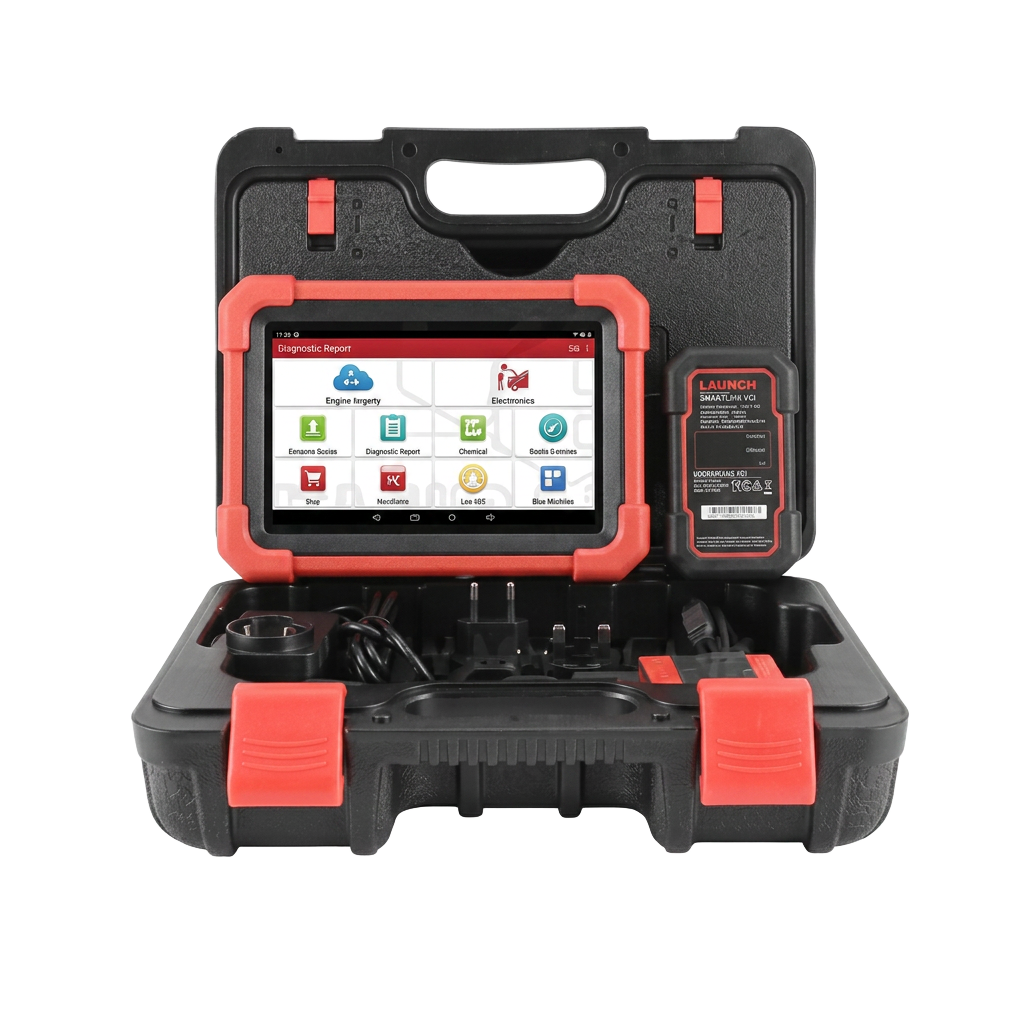
Turbocharger and boost problems are among the most common — and most misdiagnosed — faults on diesel SUVs in Pakistan. A Toyota Fortuner that loses power on the Motorway, a Hilux that blows black smoke under load, or a Land Cruiser Prado that whistles on acceleration: in most cases the fault is not the turbo itself but a sensor, a hose, or an actuator that a proper diagnostic scan can pinpoint in minutes. This guide explains how turbo boost works, the faults Pakistani workshops see every week in 2026, and how to diagnose them correctly instead of replacing parts on guesswork.
How Turbo Boost Works on a Diesel SUV
A turbocharger uses exhaust gas to spin a turbine, which drives a compressor that forces extra air into the engine. More air means more fuel can be burned, which means more power from a smaller engine. On the diesel SUVs that dominate Pakistani roads — Toyota Fortuner 2.8 GD-6, Hilux Revo 2.8, Land Cruiser Prado 2.8, and the diesel variants of the Kia Sportage and Hyundai Tucson — boost pressure typically runs between 1.0 and 1.8 bar under full load, controlled by the ECU through a variable-geometry turbo (VGT) actuator or a wastegate.
The ECU constantly compares actual boost pressure against a target value calculated from engine speed, load, and throttle position. When the two do not match, it stores a fault code — most commonly P0299 (underboost) or P0234 (overboost) — and often puts the vehicle into limp mode, capping power to protect the engine. That limp mode is what brings most customers to the workshop.
The 6 Most Common Turbo Faults on Pakistani Diesel SUVs
1. Underboost (P0299) — the number one complaint
Underboost means the turbo is not producing the pressure the ECU expects. On a Fortuner or Hilux, the most frequent causes are a split or loose boost hose, a leaking intercooler, a stuck VGT actuator, or a clogged air filter choking the intake. In Pakistan's dusty conditions, air filters clog far faster than the service manual assumes. Before condemning the turbo, always check the intake path first: a Rs 2,500 air filter and a cracked Rs 4,000 boost hose cause the same symptoms as a Rs 300,000 turbo replacement.
2. Overboost (P0234) — dangerous if ignored
Overboost is the opposite problem: boost pressure exceeds the safe limit. It is usually caused by a sticking VGT mechanism (soot buildup is common on Pakistani diesel), a faulty boost pressure sensor, or a wastegate actuator that has seized. Overboost can damage the engine — excessive cylinder pressure cracks pistons and blows head gaskets — so never clear the code and send the customer away.
3. Turbo actuator failure
Modern diesel turbos use an electronic actuator to move the VGT vanes. When the actuator's internal position sensor drifts or its motor wears out, the ECU loses control of boost. The tell-tale sign is boost that is fine at idle but erratic under load. On 2021–2025 Fortuner and Hilux models, actuator faults are one of the most common complaints. The actuator can often be replaced separately from the turbo cartridge — a repair that costs a fraction of a full turbo swap, but only if the diagnosis is correct.
4. Boost leaks — the silent power thief
A small leak in a boost hose, intercooler pipe, or clamp sounds like a faint hiss under acceleration and costs 20–30% of the engine's power. Smoke testing the intake system is the professional way to find these leaks. A scanner alone cannot find a boost leak — but live boost pressure data showing a slow rise to target, combined with a smoke test, confirms it in minutes. Many workshops waste hours chasing sensors when a Rs 1,200 hose clamp is the real culprit.
5. Soot and carbon buildup in the VGT
Pakistani diesel, stop-start city driving, and frequent short trips cause soot to accumulate on the VGT vanes. The vanes stick, boost response becomes sluggish, and the engine feels flat below 2,000 rpm. A forced DPF regeneration and a VGT actuator sweep test through the scanner often restore normal operation without removing the turbo.
6. Oil starvation and turbo bearing wear
A turbo spins at up to 200,000 rpm and depends entirely on clean engine oil. Extended oil change intervals — still common in Pakistan, where many owners stretch services to 10,000 km or more — starve the turbo bearings and kill the turbo. Blue smoke on startup, a whining noise that rises with engine speed, and oil in the intercooler pipes are the warning signs. Once the bearings are worn, there is no repair short of a rebuild or replacement.
How a Professional Scanner Diagnoses Turbo Problems
Guessing at turbo faults is expensive: a new turbo for a Fortuner 2.8 costs Rs 280,000–Rs 450,000, while the actual fault is often a Rs 5,000–Rs 40,000 part. A professional scanner changes the economics completely by showing what the ECU sees in real time. Live boost data graphs requested boost against actual boost on a test drive — a gap of more than 0.2 bar under full load points to a leak, a weak actuator, or a tired turbo. Actuator tests command the VGT through its full range: a smooth sweep clears the actuator, a stuck one condemns it. DPF and EGR functions matter too, because a blocked DPF raises back-pressure and strangles turbo response.
For this work, the Launch X-431 Creader Professional 919 MAX (Rs 165,000 at MS Auto Tools) is a strong fit for Pakistani workshops: full-system diagnostics for Toyota, Kia, Hyundai and other diesel SUVs, live data graphing, bi-directional actuator tests and DPF regeneration — the exact functions turbo diagnosis needs. Order it online at https://msautotools.com/product.php?slug=launch-x431-creader-919-max.
Workshop CTA: If your workshop is still diagnosing turbo faults by swapping parts, a proper scanner pays for itself on the first Fortuner or Hilux job. Message MS Auto Tools on WhatsApp at +92 300 0678111 for the genuine Launch X-431 Creader 919 MAX at Rs 165,000 — in stock, with warranty and after-sales support across Pakistan.
Step-by-Step Turbo Diagnostic Workflow
A repeatable workflow keeps diagnosis fast and accurate:
1. Read the codes and freeze frame data. Note the exact codes (P0299, P0234, P2563 actuator range, and any DPF or EGR codes) plus the engine speed, load and boost values recorded when the fault occurred.
2. Check the basics first. Air filter condition, boost hoses and clamps, intercooler for oil or damage, and oil level and quality.
3. Graph live boost data on a test drive. Compare requested versus actual boost under full load in 3rd or 4th gear.
4. Run the actuator test. Command the VGT actuator through its range with the scanner. A smooth sweep with matching position feedback clears the actuator; a stuck or slow response condemns it.
5. Smoke test the intake if boost is low. Pressurise the intake and find the leak visually instead of replacing hoses one by one.
6. Check DPF soot load and EGR operation. High soot load or a stuck EGR valve will mimic turbo failure. Run a forced regeneration if the soot load justifies it.
7. Only then consider the turbo itself. Check shaft play and oil in the intake. If the turbo is genuinely worn, quote the customer with confidence — the diagnosis is documented, not guessed.
This workflow typically takes 45–60 minutes and prevents the most expensive mistake in diesel repair: replacing a good turbo.
Genuine Tools Warning: Counterfeit Scanners Cannot Diagnose Turbos
A word of warning: counterfeit and cloned diagnostic scanners are flooding the Pakistani market at suspiciously low prices. A clone may read basic fault codes, but it cannot run bi-directional actuator tests, graph live boost data accurately, or perform DPF regenerations — the exact functions turbo diagnosis depends on. Worse, some clones have corrupted ECU data during service functions, turning a simple actuator test into a bricked control unit.
MS Auto Tools sells only genuine Launch, Autel, Xhorse, Thinkcar, OBDSTAR and XTOOL equipment with official warranty. A genuine Launch X-431 Creader 919 MAX at Rs 165,000 with warranty and local support costs less than one wrongly replaced turbo.
What Turbo Diagnosis Costs in Pakistan (2026)
A professional turbo diagnostic session at a well-equipped workshop in Lahore, Karachi, Islamabad or Bahawalpur typically costs Rs 2,000–Rs 5,000, including the scan, live-data test drive and a written report. Repair costs vary by cause: a boost hose or clamp Rs 1,500–Rs 8,000; a boost pressure sensor Rs 12,000–Rs 25,000; a VGT actuator Rs 45,000–Rs 90,000; a DPF cleaning Rs 15,000–Rs 35,000; and a full turbo replacement Rs 280,000–Rs 450,000 for a Fortuner or Hilux.
FAQ
Why does my Fortuner lose power on the motorway but feel fine in the city?
Motorway driving demands sustained high boost, which exposes leaks, weak actuators and soot-stuck VGT vanes that city driving never stresses. The ECU detects underboost at sustained load and enters limp mode. A live-data test drive under load is the only reliable way to reproduce and confirm it.
What does the P0299 underboost code mean?
P0299 means the turbo is producing less boost than the ECU requested. Common causes on Pakistani diesel SUVs are boost leaks, a clogged air filter, a sticking VGT actuator, or a blocked DPF. It rarely means the turbo itself has failed — always check hoses, sensors and the DPF first.
Can a scanner fix a turbo problem?
A scanner cannot repair a worn turbo, but it can diagnose the real cause and, in many cases, resolve the symptoms: running a VGT actuator sweep, performing a forced DPF regeneration, and resetting learned values after a repair.
How do I know if my turbo is actually failing or just needs cleaning?
A failing turbo shows shaft play, blue smoke, oil in the intercooler pipes, and a loud whine that rises with rpm. A turbo that only needs attention shows sluggish boost below 2,000 rpm and soot-related actuator codes, and improves after a DPF regeneration and actuator sweep.
Is it safe to drive with a turbo fault code?
Short, gentle driving to reach a workshop is usually fine, but ignoring an overboost code (P0234) risks serious engine damage, and driving in limp mode for weeks allows soot and carbon to build up further. Get the fault diagnosed the same week it appears.
Which scanner is best for turbo diagnostics on diesel SUVs in Pakistan?
Look for full-system coverage of Toyota, Kia and Hyundai, live boost pressure graphing, bi-directional VGT actuator tests, and DPF regeneration. The Launch X-431 Creader 919 MAX at Rs 165,000 covers all of these and is a popular choice for workshops handling Fortuner, Hilux, Sportage and Tucson diesels.
Conclusion
Turbo and boost faults on diesel SUVs are common, but they are rarely what they first appear to be. Most cases trace back to a leak, a sensor, a stuck actuator, or a blocked DPF — not a dead turbo. The workshops that diagnose these faults quickly and profitably in 2026 are the ones with a professional scanner, a repeatable workflow, and the discipline to check the cheap causes first. If your workshop handles Fortuner, Hilux, Prado, Sportage or Tucson diesels, MS Auto Tools stocks the genuine Launch X-431 Creader 919 MAX at Rs 165,000 with warranty and nationwide delivery — message us on WhatsApp at +92 300 0678111 for today's price and free guidance on choosing the right scanner for your workshop.