
TPMS Service in Pakistan: Sensors, Tools & Procedures (2026 Pakistan Guide)
2026-11-13 14:01:00 · by MS Auto Tools
TPMS Service in Pakistan: Sensors, Tools & Procedures (2026 Pakistan Guide)
TPMS, the tyre pressure monitoring system, is the warning light most Pakistani drivers ignore until a tyre is already damaged. On a Toyota Corolla, Honda Civic, Kia Sportage or Hyundai Tucson, a flashing TPMS light means one or more tyre sensors has stopped reporting. The only fix is a proper TPMS service: read the sensors, find the dead one, replace or program it, and relearn the car so the light goes out.
What TPMS Actually Does, and Why the Light Comes On
Every car sold in Pakistan since roughly 2018 with a TPMS system carries a small battery-powered sensor inside each wheel, usually attached to the valve stem. The sensor measures tyre pressure and temperature, then transmits the reading by radio at 315 MHz or 433 MHz to a receiver in the car. When pressure in any tyre drops about 25 percent below the recommended value, the dashboard TPMS light comes on. There are two kinds of system: direct TPMS, with physical sensors in the wheels, fitted to the Corolla Cross, Civic, Sportage, Tucson, MG HS and most imported cars; and indirect TPMS, which uses the ABS wheel speed sensors and is fitted to some Suzuki and older Toyota models. Direct TPMS earns a workshop money, because it needs sensor activation, programming and relearn, while indirect TPMS only needs a two-minute reset after the tyres are inflated.
The light comes on for three common reasons in Pakistan. First, a genuine pressure drop: a slow puncture, a leaking valve, or cold winter mornings in Islamabad and Murree dropping pressure by 1 to 2 PSI overnight. Second, a dead sensor battery: the sealed lithium battery inside each sensor lasts 5 to 7 years, so a 2018 or 2019 Corolla or Civic is now reaching the age where sensors start dying one by one. Third, a sensor damaged during tyre fitting, when a careless tyre changer breaks the valve stem sensor.
A workshop that cannot read TPMS sensors is guessing. The right tool tells you in seconds which wheel is faulty and whether the battery is weak, so the job is fixed on the first visit.
The TPMS Service Workflow, Step by Step
A proper TPMS service follows the same five steps on every car.
Step one is the scan. Connect a diagnostic scanner to the OBD2 port and read the TPMS module for fault codes. Codes like C2121, C2122 or C2123 point to a specific wheel, and a code for "transmitter ID not registered" means the car has lost the sensor entirely. Live pressure readings also help: a sensor reading 0 PSI while the tyre is clearly inflated is a dead sensor, not a puncture.
Step two is sensor activation. A dedicated TPMS tool wakes each sensor with a low-frequency signal and reads its ID, pressure, temperature, battery level and frequency. Walk around the car in order and record the four IDs. Any sensor that does not respond is dead or damaged and must be replaced.
Step three is replacement and programming. A new universal sensor such as a THINKCAR MX-Sensor costs far less than a dealer sensor and can be programmed in two ways: clone the old sensor ID onto the new sensor, so the car needs no relearn at all, or create a brand-new ID and then teach the car to recognise it. Cloning is faster and is the method most workshops prefer.
Step four is the relearn. If the sensor ID is new, the car must be taught to recognise it. There are three relearn methods: stationary relearn through the OBD2 port, auto relearn by driving at 30 to 50 km/h for 10 to 20 minutes, and manual relearn by following a specific sequence of ignition and button presses. Toyota and Honda models in Pakistan mostly use OBD relearn or auto relearn, while some Kia and Hyundai models need the OBD method.
Step five is verification. Inflate all four tyres to the pressure on the driver's door sticker, usually 30 to 33 PSI for a Corolla or Civic and 33 to 35 PSI for a Sportage or Tucson, clear the codes, and confirm the light stays off on a short test drive.
Common TPMS Fault Codes and What They Mean
Pakistani workshops see the same handful of TPMS codes again and again. C2121 to C2124 mean a specific wheel transmitter is not sending data, which is almost always a dead battery or a broken sensor. C2126 means the TPMS receiver cannot hear any sensor, which points to a receiver or wiring fault rather than the sensors.
The most misunderstood code is the one that appears after a tyre rotation. Many cars expect the sensor IDs in a specific wheel order, so after rotating tyres without a relearn, the dashboard shows the wrong tyre as low. The fix is a simple relearn, not a new sensor. Also check the spare wheel: some imported cars carry a sensor in the spare, and if the spare is flat or its sensor battery is dead, the light stays on even though all four road wheels are fine.
The Tool That Pays for Itself: THINKCAR VENU-i Pro
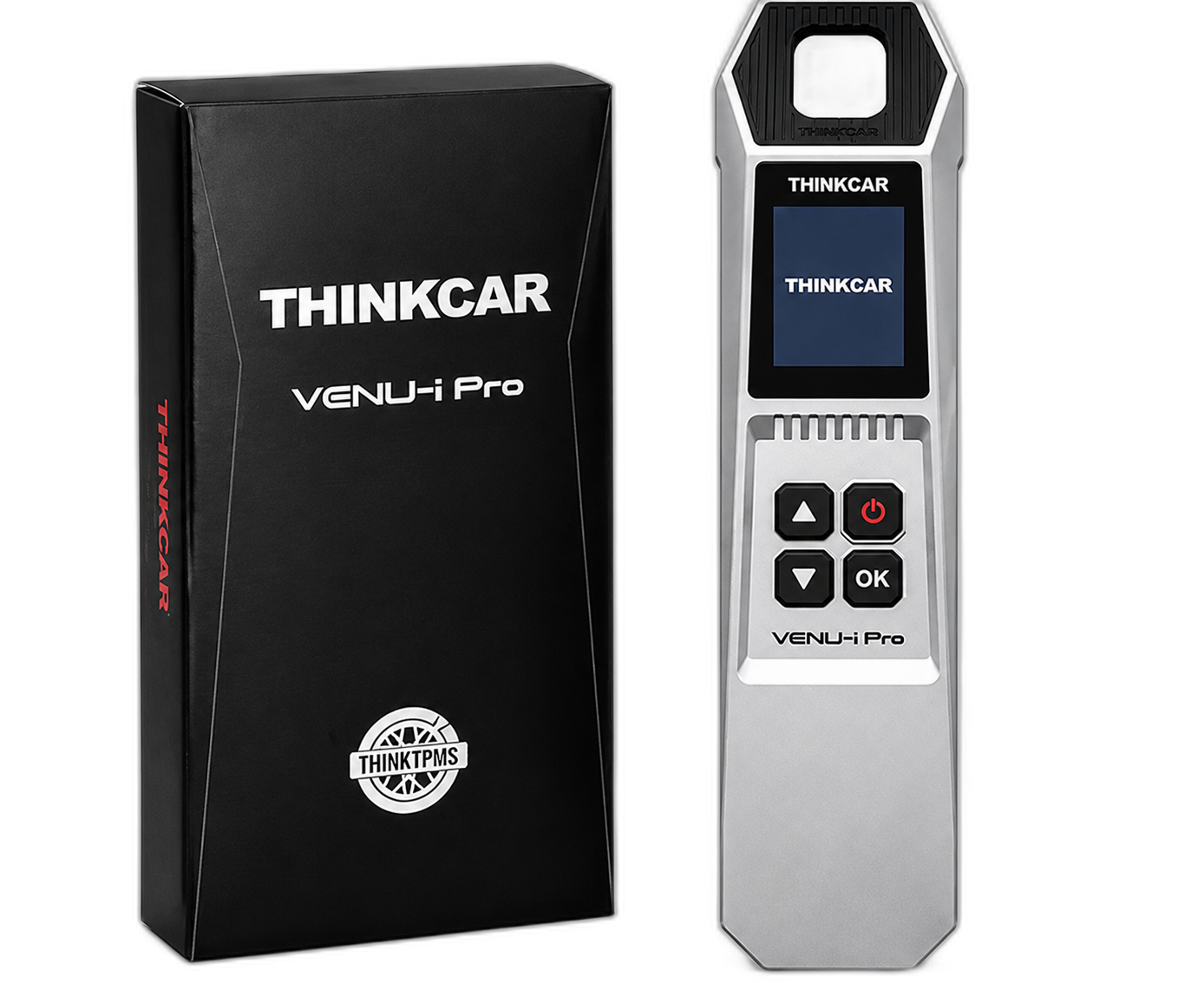
A dedicated TPMS tool is the single most profitable small investment a tyre shop or workshop can make in 2026. The THINKCAR VENU-i Pro is a handheld tool that activates and reads 315 MHz and 433 MHz sensors, programs THINKCAR MX-Sensors by cloning or creating IDs, supports OBD-II TPMS relearn, and checks sensor health including battery, ID, pressure and temperature.
At Rs 40,000 in Pakistan, the VENU-i Pro pays for itself quickly. A sensor activation and diagnosis is a Rs 1,000 to Rs 1,500 job, a sensor replacement with programming and relearn is Rs 4,000 to Rs 8,000, and a full four-sensor replacement on a Corolla or Civic is a Rs 15,000 to Rs 25,000 job. A workshop doing just two TPMS jobs a week recovers the tool's cost in about two months. It is in stock from MS Auto Tools at https://msautotools.com/product.php?slug=thinkcar-venu-i-pro
For workshops that also want full-system diagnostics, the Launch X431 Pro V5.0 at Rs 290,000 covers TPMS relearn and programming alongside OE-level diagnostics, DoIP and CAN FD, and 35 plus service functions on the same tablet. Details are at https://msautotools.com/product.php?slug=launch-x431-pro-v5
If your workshop needs help choosing between a dedicated TPMS tool and a full diagnostic tablet, message MS Auto Tools on WhatsApp at +92 300 0678111 and tell them which cars you service most.
What TPMS Service Should Cost in Pakistan in 2026
Pricing a TPMS job honestly keeps customers coming back. Sensor activation and diagnosis: Rs 1,000 to Rs 1,500. TPMS relearn after a tyre rotation or sensor swap: Rs 1,500 to Rs 2,500. One universal sensor supplied, programmed and fitted: Rs 4,000 to Rs 8,000. Four sensors on a Corolla, Civic or Swift: Rs 15,000 to Rs 25,000 including programming and relearn. A dealer sensor for a Sportage or Tucson can cost Rs 8,000 to Rs 12,000 each, which is why most customers choose a programmed universal sensor at half the price.
Warning: Fake TPMS Tools and Sensors Brick Cars
The TPMS market in Pakistan is full of counterfeit tools and clone sensors, and they cause real damage. A fake TPMS tool may read a sensor once and then fail to program it, leaving the car with a sensor the ECU refuses to recognise. A clone sensor with a copied ID can confuse the receiver so badly that the TPMS module needs a dealer-level reset.
Buy genuine tools from an authorised seller with warranty and after-sales support. MS Auto Tools supplies genuine THINKCAR, Launch, Autel, Xhorse, OBDSTAR and XTOOL equipment with warranty, and every tool is tested before dispatch. A genuine VENU-i Pro at Rs 40,000 with free lifetime updates costs less than one corrupted TPMS module repair.
Frequently Asked Questions
How long does a TPMS sensor battery last?
A TPMS sensor battery lasts 5 to 7 years under normal use. On a 2018 or 2019 Corolla, Civic or Sportage, sensors are now reaching the end of that life, which is why TPMS lights are appearing on cars that have never had a tyre problem.
Can I drive with the TPMS light on?
Yes, for a short distance, but you are driving without pressure warnings. A slow puncture can go unnoticed until the tyre is damaged beyond repair. Get the system checked within a few days, and check the tyre pressures manually with a gauge in the meantime.
Why does the TPMS light come on in cold weather?
Cold air contracts, so tyre pressure drops by about 1 PSI for every 5 degrees Celsius of temperature fall. On a cold morning in Islamabad or Murree, a tyre at 32 PSI can read 29 PSI and trigger the light. Inflate the tyres to the door-sticker pressure when cold and the light should go out after a short drive.
Do I need a relearn after rotating my tyres?
On most cars with direct TPMS, yes. The car stores each sensor ID against a wheel position, so after rotation it reports the wrong tyre as low unless a relearn is done. Some cars relearn automatically after 10 to 20 minutes of driving, while Toyota, Honda, Kia and Hyundai models in Pakistan usually need an OBD relearn. A relearn costs Rs 1,500 to Rs 2,500 at a workshop.
Can a universal sensor replace a dealer sensor?
Yes. A programmable universal sensor such as a THINKCAR MX-Sensor can be cloned with the old sensor ID or programmed with a new ID, and it works exactly like the original. A universal sensor programmed and fitted costs Rs 4,000 to Rs 8,000, while a dealer sensor for a Sportage or Tucson can cost Rs 8,000 to Rs 12,000 before fitting.
Which tool do I need to start offering TPMS service?
A dedicated TPMS tool such as the THINKCAR VENU-i Pro at Rs 40,000 covers activation, programming and OBD relearn, and it is the fastest way to start. A full diagnostic tablet such as the Launch X431 Pro V5.0 at Rs 290,000 adds TPMS service to a complete diagnostic toolkit. For advice on which one suits your workshop, message MS Auto Tools on WhatsApp at +92 300 0678111.
Start Earning from TPMS Service Today
TPMS work is steady, high-margin and growing, because every car with sensors from 2018 onwards is now reaching sensor-battery age. A workshop with a genuine TPMS tool and a stock of universal sensors can turn a warning light into a Rs 4,000 to Rs 8,000 job in under thirty minutes, and a full four-sensor replacement into a Rs 15,000 to Rs 25,000 job.
To order the THINKCAR VENU-i Pro at Rs 40,000, or to ask which TPMS setup fits your workshop, message MS Auto Tools on WhatsApp at +92 300 0678111.