
SAS Calibration After Wheel Alignment: Step-by-Step Guide (2026 Pakistan Guide)
2026-11-11 14:02:31 · by MS Auto Tools
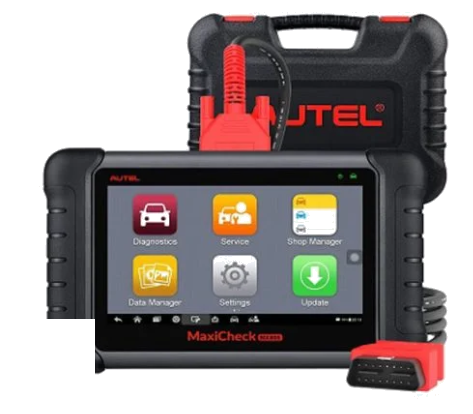
If the steering wheel sits off-centre after a wheel alignment, or the traction control light comes on for no reason, the steering angle sensor (SAS) probably needs recalibration. SAS calibration resets the sensor's "straight ahead" zero point after alignment work, and skipping it is one of the most common mistakes in Pakistani workshops. This guide explains what SAS calibration is, when it is needed, the exact step-by-step procedure, the tools that do it, and what to charge for the job in 2026.
What Is a Steering Angle Sensor?
The steering angle sensor sits inside the steering column, usually behind the steering wheel, and measures exactly how far — and in which direction — the driver has turned the wheel, sending that angle to the car's ECU hundreds of times per second. The ECU compares it with the speed of each wheel, the yaw rate and the lateral acceleration to decide whether the car is going where the driver is pointing it.
That data feeds the systems drivers rely on every day: electronic stability control (ESC), traction control, ABS, lane-keep assist, adaptive headlights and the electric power steering itself. On a Toyota Corolla, Honda Civic, Kia Sportage or Hyundai Tucson, the SAS is not a luxury extra — it is a core safety sensor. If its zero point is wrong, every one of those systems works from a false reading.
The sensor's zero point is the angle it reports when the wheels point straight ahead, stored in the ECU as a learned value. Anything that changes the steering geometry — a wheel alignment, a steering rack replacement, a new clock spring, a suspension repair — can shift the physical straight-ahead position away from the stored zero. Calibration teaches the ECU the new zero.
Why Wheel Alignment Triggers SAS Calibration
A wheel alignment changes the toe, camber and caster angles so the wheels track straight and the tyres wear evenly. The technician centres the steering wheel during the job, but "centred" on the rack is not the same as the sensor's stored zero — even a 2–3 degree difference is enough to confuse the stability control system.
The problem is worse on Pakistani roads. Potholes, speed breakers and rough patches knock alignments out faster than in other countries, so alignment is a high-volume job here — and every alignment on a car with ESC is a car that may need SAS calibration afterwards. Workshops that align the wheels but skip the sensor reset send customers out with a crooked steering wheel, a dashboard warning light, or a stability system that brakes the wrong wheel at the wrong moment.
Symptoms of a Steering Angle Sensor That Needs Calibration
A customer will rarely say "my SAS needs calibration". They describe symptoms, and it is the technician's job to connect them:
Steering wheel off-centre while driving straight. After an alignment the car drives straight but the wheel sits a few degrees to one side. The alignment is correct; the sensor zero is not.
ESC, traction control or ABS warning light on. The stability system sees a steering angle that does not match the wheel speeds and flags a fault — common codes include C1231, C1290 and U0126 on Toyotas, and 83-11 or 84-11 on Hondas.
Stability control intervening for no reason. The car brakes one wheel on a straight road or cuts power in a gentle turn, because the ECU thinks the driver is steering hard when they are not.
Steering heavier on one side. Electric power steering uses the SAS reading to set assistance. A wrong zero makes assistance uneven left and right.
The code returns after clearing. If the SAS fault code comes straight back on the next drive, the sensor is not faulty — it is uncalibrated. Clearing codes never fixes a wrong zero.
Tools You Need for SAS Calibration
You cannot calibrate a steering angle sensor with a spanner. It is a software procedure done through the OBD2 port, so the tool matters:
A full-system scanner with SAS reset. Basic code readers cannot do it. You need a scanner that lists "Steering Angle Sensor Calibration" or "SAS Reset" in its service menu. The Autel MaxiCheck MX808S (Rs 148,000) and MaxiCheck MX900 (Rs 155,000) both cover SAS calibration on Toyota, Honda, Suzuki, Kia, Hyundai and most other brands sold in Pakistan, including CAN FD and DoIP models. For a workshop doing alignments daily, the Launch X-431 Creader 919 MAX (Rs 165,000) is another solid option.
A level surface and a straight steering position. Calibration must be done on flat ground with the front wheels pointing dead straight. A workshop floor is fine; a sloped driveway is not.
A charged battery. Keep the battery above 12.5 volts during the procedure. If the voltage drops mid-calibration, the procedure fails and the sensor may store an invalid zero.
The alignment already finished. SAS calibration is the last step after the alignment, never before. Calibrating first and aligning afterwards puts the zero out again.
SAS Calibration Step by Step
The exact menu names vary slightly between scanner brands, but the procedure is the same on almost every car. Here it is on an Autel MaxiCheck MX808S, which is the tool most alignment shops in Pakistan keep at the alignment bay:
Step 1 — Finish the alignment first. Complete the toe, camber and caster adjustment, lock the steering wheel in the straight-ahead position with a holder, and confirm the wheels point straight. Do not move the car after this point.
Step 2 — Park on level ground, engine off, ignition on. The car must be stationary on a flat surface. Switch the ignition on but leave the engine off, apply the parking brake and make sure the steering wheel is centred — the spokes should be level.
Step 3 — Connect the scanner and read the live steering angle. Plug the scanner into the OBD2 port, select the vehicle, then open the live data for the steering angle sensor. With the wheels straight, the reading should be close to 0 degrees. If it reads 5, 10 or 15 degrees with the wheel straight, the zero is wrong — that confirms calibration is needed.
Step 4 — Clear any stored SAS fault codes. Go into the ABS/ESC system, read the fault codes and clear them. Note the codes first — a code like C1515 (torque sensor fault) or a sensor circuit code means a hardware problem, and calibration will not fix it.
Step 5 — Open the SAS calibration function. In the service menu, select "Steering Angle Sensor Calibration" or "SAS Reset". The scanner will ask you to confirm the wheels are straight and the car is stationary. Confirm, and follow the on-screen prompts exactly — some cars ask you to turn the wheel fully left, then fully right, then back to centre; most Toyotas and Hondas just need the centred position.
Step 6 — Wait for the confirmation. The procedure takes 30 seconds to 2 minutes. Do not touch the steering wheel, start the engine or disconnect the scanner until the screen shows "Calibration successful" or "Learning completed".
Step 7 — Verify the zero. Go back to live data: with the wheels straight the reading should now be 0.0 to 0.5 degrees. Turn the wheel fully left and right — the reading should sweep smoothly from about -540 to +540 degrees with no jumps or dead spots.
Step 8 — Road test. Drive in a straight line on a flat road at 40–60 km/h. The steering wheel should sit level, no warning lights should appear, and the stability system should stay quiet. If the ESC light returns, repeat the procedure — some cars need two attempts, especially after a battery disconnect.
Common Mistakes That Ruin a Calibration
Calibrating on a slope. Even a gentle slope shifts the car's weight and steering geometry enough to store a wrong zero. Always use a flat bay.
Calibrating before the alignment is finished. Any toe adjustment after calibration moves the zero again. Alignment first, calibration last — every time.
Ignoring a faulty sensor. If the live angle reading jumps, freezes or shows an impossible value, the sensor or clock spring is faulty. Calibration cannot fix a broken sensor, and forcing it can store a bad value that is harder to clear later.
Low battery voltage. A weak battery during calibration can interrupt the write process. Keep voltage above 12.5V and use a maintainer if the car has been sitting.
Using a clone scanner. Counterfeit Autel and Launch units are common in Pakistani markets. They often fail halfway through the procedure or report success when nothing was written. If a calibration "succeeds" but the warning light stays on, suspect the tool before suspecting the car.
How Much to Charge for SAS Calibration in Pakistan
SAS calibration is a quick, high-value service. In 2026, workshops in Lahore, Karachi, Islamabad and Bahawalpur typically charge Rs 2,000–4,000 for a standalone calibration, Rs 1,500–2,500 when bundled with an alignment, Rs 3,000–5,000 after steering or suspension repair, and Rs 4,000–6,000 on premium and ADAS cars such as the Sportage, Tucson, Corolla Cross and Fortuner. The job takes 10–15 minutes once the alignment is done, so it is one of the best margin-per-minute services a workshop can offer. A scanner like the Autel MaxiCheck MX808S at Rs 148,000 pays for itself on SAS calibrations, oil resets, TPMS work and full-system scans within a few months of regular use.
When Calibration Is Not Enough
If calibration fails twice with a genuine scanner, the problem is hardware — a broken clock spring (common on high-mileage Corollas and Civics), sensor damage after a front-end impact, wiring corrosion from monsoon flooding, or a rack replaced without a follow-up calibration. Stop and diagnose the sensor circuit instead of repeating the procedure: repeating a failed calibration on a faulty sensor can store a corrupt zero that needs dealer-level tools to clear.
Need a scanner that does SAS calibration properly? MS Auto Tools stocks genuine Autel MaxiCheck MX808S (Rs 148,000) and MaxiCheck MX900 (Rs 155,000), plus the Launch X-431 Creader 919 MAX (Rs 165,000) — all with SAS reset, full-system diagnostics and warranty. Message us on WhatsApp at +92 300 0678111 for the best workshop price and delivery anywhere in Pakistan.
Frequently Asked Questions
Do I need SAS calibration after every wheel alignment?
Yes, on any car with stability or traction control. The alignment changes the steering geometry, so the sensor's stored zero no longer matches the wheels — skip it and the wheel sits crooked or a warning light comes on.
How long does SAS calibration take?
The calibration itself takes 30 seconds to 2 minutes on the scanner. Including the live-data check and road test, budget 10–15 minutes per car after the alignment is finished.
Can I calibrate the steering angle sensor without a scanner?
No. The zero is a learned value stored in the ECU, and only a diagnostic scanner can reset it. No Toyota, Honda, Suzuki, Kia or Hyundai sold in Pakistan in the last ten years self-learns it from driving.
What happens if I skip SAS calibration after alignment?
The steering wheel sits crooked, the ESC or traction control light may come on, and the stability system can brake one wheel during normal driving. It is a safety issue, not a cosmetic one.
Which scanner is best for SAS calibration in a Pakistani workshop?
The Autel MaxiCheck MX808S (Rs 148,000) and MX900 (Rs 155,000) are the most popular choices — both do SAS calibration, full-system scans and service resets on the cars workshops see daily. The Launch X-431 Creader 919 MAX (Rs 165,000) is a strong alternative.
Does disconnecting the battery affect the steering angle sensor?
It can. On many cars a long battery disconnect wipes the learned zero, so the ESC light comes on at the next start. The fix is the same: a scanner-based SAS calibration with the wheels straight.
Steering wheel off-centre after an alignment? Do not send the customer away with a warning light. Get a genuine scanner with SAS calibration and do the job properly — message MS Auto Tools on WhatsApp at +92 300 0678111 for genuine Autel and Launch tools with warranty, delivered across Pakistan.