
OBD2 Port Location Guide: Where to Plug In on Popular Pakistani Cars (2026 Pakistan Guide)
2026-11-06 18:00:03 · by MS Auto Tools
# OBD2 Port Location Guide: Where to Plug In on Popular Pakistani Cars (2026 Pakistan Guide)
Every car sold in Pakistan since the mid-2000s has a 16-pin OBD2 diagnostic port, and every check-engine-light diagnosis, key programming job and service reset starts with plugging a scanner into it. The problem is simple and universal: the port is never in exactly the same place. On a Toyota Corolla it sits under the steering column in plain sight; on a Honda Civic it hides behind a small panel; on a Suzuki Swift it tucks up behind the dashboard trim. This guide shows you the exact OBD2 port location on the 15 most common cars on Pakistani roads in 2026, explains what to do when you cannot find it, and tells you which scanner to plug in once you do.
## What Is the OBD2 Port and Why Does Its Location Matter?
The OBD2 port — formally the Data Link Connector (DLC) — is a standardised 16-pin socket that gives a diagnostic scanner access to the car's engine control unit (ECU), transmission, ABS, airbags and dozens of other systems. By law and by design, manufacturers must place it within reach of the driver's seat, usually within 60 cm of the steering column, but that still leaves a lot of hiding places: under the dashboard, behind a cover panel, inside the centre console, or tucked behind the glovebox.
For a workshop, knowing the location matters because time is money. A mechanic who spends five minutes hunting for the port on every car loses over an hour a day across a busy workshop. For a car owner, it matters because you cannot read your own fault codes, reset a service light or check a used car before buying it without first finding the socket.
The good news: once you know the pattern, you will find the port on almost any car in under 30 seconds. Roughly 80% of cars on Pakistani roads have it under the driver's side dashboard, just below or to the left of the steering column.
## The 30-Second Rule: Where to Look First
Before you start pulling panels off, follow this order. It finds the port on nine out of ten cars:
1. Under the steering column, driver's side. Kneel outside the car, look up under the dashboard below the steering wheel. The black 16-pin socket is usually mounted on a bracket, facing down or toward the driver.
2. Left of the steering column, near the door. On many Toyotas and Hondas the port sits in a small recess on the lower dashboard panel, sometimes behind a flip-down cover.
3. Behind a small rectangular cover. Some cars hide the port behind a plastic flap. Press the edges — it usually pops off with a fingernail.
4. Centre console, near the gear lever. A few models place it low in the centre stack.
5. Under the glovebox, passenger side. Rare on Pakistani-market cars, but worth checking on some imported models.
If you still cannot see it, use your phone torch and feel with your fingers — the socket has a distinctive trapezoidal shape, wider at the top than the bottom, with 16 small pin holes.
## Toyota Corolla (2009–2026): Under the Steering Column
The Corolla is Pakistan's best-selling car, so this is the location every workshop learns first. On the Corolla Grande, Altis and Cross (2009 to 2026 models), the OBD2 port sits directly under the steering column, slightly to the left, mounted on a bracket just above the driver's knees. It faces downward and is visible the moment you look up under the dashboard — no cover, no panel to remove.
## Honda Civic (2016–2026) and Honda City (2009–2026)
The Civic hides its port better than the Corolla. On the 10th-generation Civic (2016–2021) and the 11th-generation (2022 onwards), the OBD2 socket is under the driver's dashboard, to the left of the steering column, behind a small rectangular trim panel. Pull the panel off with your fingers — it is held by two clips — and the port is right there.
The Honda City is easier: on the 5th-generation City (2009–2021) and the current 6th-generation model, the port is under the steering column in the open, facing the driver. No cover.
## Suzuki Swift, Cultus and Alto: Small Cars, Tucked-Away Ports
Suzuki's small cars are where mechanics most often waste time. On the Suzuki Swift (2010–2026), the port is under the driver's dashboard, high up and to the right of the steering column, tucked behind the lower dash trim. You will usually need to feel for it rather than see it.
On the Suzuki Cultus (2017 onwards), the port sits in a similar spot but slightly lower, just above the driver's right knee. On the Suzuki Alto (2019 onwards), it is under the steering column on the driver's side, partly hidden by the fuse-box cover.
A practical tip for all three: the port is black plastic on black trim, so it is nearly invisible in a dim workshop. A phone torch changes everything.
## Kia Sportage and Hyundai Tucson: SUVs with Easy Access
Kia and Hyundai made life easy. On the Kia Sportage (2019–2026) and the Hyundai Tucson (2020–2026), the OBD2 port is under the driver's dashboard, to the left of the steering column, in the open with no cover. It is one of the most accessible ports on any car sold in Pakistan — you can plug in a scanner while sitting in the driver's seat without bending down.
## Toyota Fortuner, Hilux and Yaris: The Rest of the Toyota Range
Toyota is consistent. On the Fortuner (2016–2026) and Hilux Revo (2016–2026), the port is under the steering column on the driver's side, facing down, just like the Corolla. On the Toyota Yaris (2020 onwards), it is in the same place. Imported Toyota models need more care: a Japanese-import Prius, Aqua or Vezel usually has the port under the driver's dashboard too, but on right-hand-drive imports it can sit behind a small panel near the fuse box.
## What to Do When You Cannot Find the Port
Sometimes the port genuinely is not where you expect. Here is the workshop checklist:
- Check the owner's manual. The OBD2 location is listed in the "maintenance" or "emissions" section, usually with a diagram.
- Look for a 16-pin socket, not a label. Many ports have no marking at all. Count the pins: 16 holes in two rows, in a trapezoid-shaped housing.
- Check behind the fuse-box cover. On several Suzuki and Daihatsu models, the port shares space with the interior fuse box.
- Imported and older cars. Cars built before 2006, and some grey imports, may have a different connector (Toyota's old 22-pin DLC, or a manufacturer-specific plug). These need an adapter cable, not a standard OBD2 scanner.
- Never force a plug. If the scanner connector does not slide in smoothly, you are in the wrong socket. Forcing it can bend pins and damage the car's wiring.
## Which Scanner Should You Plug In?
Finding the port is only half the job — the scanner you plug in decides what you can actually do. A basic code reader will show engine fault codes; a full-system scanner reads ABS, airbags, transmission, steering and body systems, and runs service functions like oil reset, EPB release and battery registration.
For workshops and serious car owners in Pakistan in 2026, two tools cover almost every car in this guide:
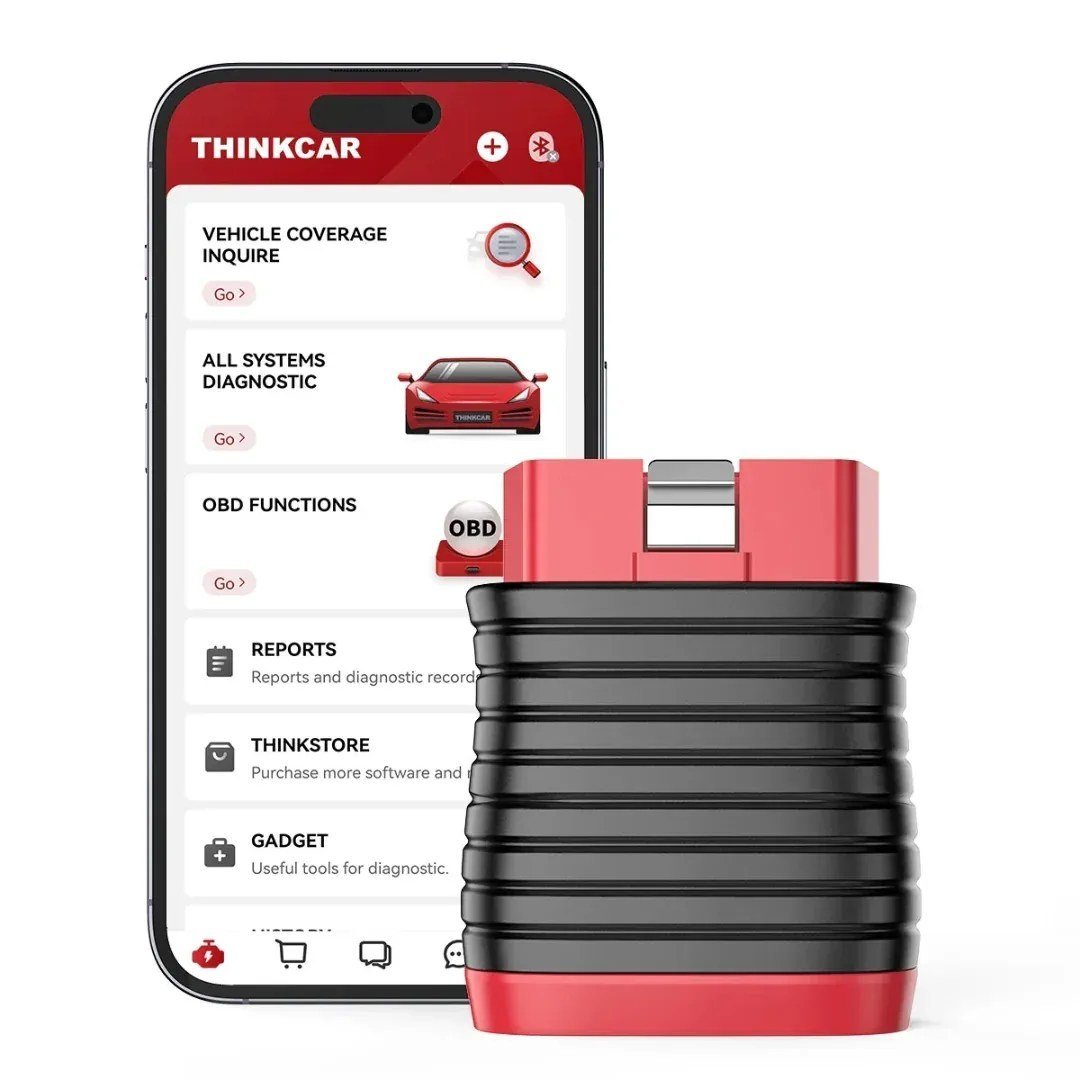
THINKCAR ScanMate — Rs 25,000. A full-system Bluetooth scanner with lifetime free updates. It plugs into any OBD2 port, reads and clears codes across engine, ABS, airbag and transmission systems, and works on Corolla, Civic, Swift, Sportage, Tucson and the rest. For a small workshop or a car owner who wants to check a used car before buying, it is the best-value entry point in 2026. See it here: https://msautotools.com/product.php?slug=thinkcar-scanmate-obd2-full-system-scan-tool-life-time-update-free
Thinkdiag 2 — Rs 65,000. A step up for workshops that need bi-directional control, service resets and deeper system coverage. It handles the same port locations but does far more once connected — active tests and full service functions on Toyota, Honda, Suzuki, Kia and Hyundai.
Ready to start diagnosing? If you have been borrowing a scanner or guessing at fault codes, now is the time to own a genuine tool. Message MS Auto Tools on WhatsApp at +92 300 0678111 for the best price on the ScanMate or Thinkdiag 2, with delivery across Pakistan and a genuine-product warranty.
## A Warning: Counterfeit Scanners and Fake Ports
A quick warning that every Pakistani workshop owner needs to hear in 2026: the market is full of counterfeit scanners sold at suspiciously low prices. A fake scanner can misread fault codes, fail halfway through a key programming job, or — worst of all — send bad commands that brick an ECU. A bricked ECU on a Corolla or Sportage can cost Rs 80,000–150,000 to replace.
## Frequently Asked Questions
### Where is the OBD2 port on a Toyota Corolla?
On all Corolla models from 2009 to 2026, including the Corolla Cross, the OBD2 port is under the steering column on the driver's side, slightly to the left, facing downward. No cover or panel needs to be removed.
### Can I find the OBD2 port without the owner's manual?
Yes. On about 80% of Pakistani-market cars it is under the driver's dashboard near the steering column. Kneel outside the car, shine a torch up under the dash, and look for the black 16-pin trapezoidal socket.
### Do all cars in Pakistan have an OBD2 port?
Almost all petrol and diesel cars sold in Pakistan since the mid-2000s have a standard 16-pin OBD2 port. Very old cars (pre-2006) and some grey imports may use a manufacturer-specific connector that needs an adapter.
### Will any scanner fit any OBD2 port?
Yes — the 16-pin connector is standardised, so any OBD2 scanner physically fits any OBD2 port. What differs is what the scanner can do once connected: basic readers show engine codes only, while full-system tools like the THINKCAR ScanMate (Rs 25,000) read ABS, airbag, transmission and more.
### Why can't I find the port on my Suzuki Swift?
The Swift's port is tucked high under the driver's dashboard, to the right of the steering column and behind the lower trim. It is black-on-black and hard to see — feel for it with your hand and use a phone torch.
Need a genuine scanner for your workshop? Contact MS Auto Tools on WhatsApp at +92 300 0678111 — genuine Autel, Launch, Xhorse, Thinkcar, OBDSTAR and XTOOL tools with warranty, delivered across Pakistan.