
Electronic Throttle Body Faults: Idle, Limp Mode & Relearn (2026 Pakistan Guide)
2026-11-25 14:03:11 · by MS Auto Tools
Electronic Throttle Body Faults: Idle, Limp Mode & Relearn (2026 Pakistan Guide)
If your car idles roughly, stalls at traffic lights, or suddenly loses power and drops into limp mode, the electronic throttle body is one of the first suspects. On modern Pakistani cars — Toyota Corolla, Honda Civic, Suzuki Swift, Kia Sportage and Hyundai Tucson — there is no throttle cable any more. A sensor on the accelerator pedal tells the engine computer what you want, and a small electric motor opens the throttle plate. When that system develops a fault, the car protects itself by limiting power, and the check engine light comes on. This guide explains the symptoms, the common fault codes, how workshops in Pakistan diagnose the problem, and how a throttle relearn is done — plus when the throttle body needs cleaning, repair or replacement.
What Is an Electronic Throttle Body?
An electronic throttle body, also called a drive-by-wire throttle, replaces the old steel cable between the accelerator pedal and the engine. Inside the unit there is a throttle plate (a round flap), an electric motor that moves it, and two position sensors that report the plate angle back to the engine control unit (ECU). The ECU compares what your foot asks for with what the plate is actually doing, hundreds of times per second. If the two disagree, or if a sensor signal goes out of range, the ECU stores a fault code and usually switches the car to limp mode. Most cars sold in Pakistan since 2015 use this system, including the Corolla Grande, Civic RS Turbo, Swift GLX, Sportage AWD and Tucson. Because there is no cable to adjust, every diagnosis and every repair after a throttle job is done through a scanner.
Common Symptoms of a Faulty Electronic Throttle Body
The symptoms usually appear gradually, which is why many owners ignore them until the car strands them. Rough or hunting idle is the most common early sign: the revs rise and fall at a traffic light, sometimes between 600 and 1,200 rpm, without you touching the pedal. Stalling at idle is the next stage, especially with the air conditioning on, because the throttle plate can no longer hold the small opening the engine needs. Hesitation when you press the accelerator is another classic sign — the car pauses for half a second before responding. Limp mode is the most alarming symptom: the car suddenly limits itself to around 2,000 rpm and 40 to 60 km/h, the check engine light comes on, and the accelerator feels dead. Poor fuel economy often follows, because the ECU runs a rich mixture to compensate for unreliable airflow data. On the Corolla 1.8 and Civic 1.5 Turbo, owners also report a jerky take-off from standstill. Any one of these symptoms is a reason to scan the car the same day — a sticking throttle plate can leave you without power in fast-moving traffic.
Fault Codes You Will See: P0120 to P2135 Explained
A professional scanner reads the exact code, and the code tells you whether the problem is the sensor, the motor, the wiring or the plate itself. P0120 to P0123 relate to throttle position sensor circuit range and voltage — low voltage usually means a broken wire or a failed sensor, high voltage often means a short. P0220 to P0223 are the same faults on the second throttle position sensor; the two sensors exist so the ECU can cross-check them, and a mismatch triggers a code even if each one looks fine alone. P2100 to P2103 cover the throttle actuator motor circuit. P2111 and P2112 mean the throttle plate is stuck open or stuck closed, usually carbon build-up or a failed motor. P2135 is the code workshops see most often on Pakistani cars: throttle position sensor correlation error, meaning sensor 1 and sensor 2 disagree. P2176 means the idle position was not learned, and that code almost always appears after someone cleaned the throttle body or disconnected the battery without doing a relearn. A good scanner also shows live data for both position sensors in percentage and volts, so you can watch the readings move smoothly as the plate opens and closes. If one sensor jumps, freezes or reads 0 percent while the other moves, the sensor or its wiring is faulty.
Why Throttle Bodies Fail on Pakistani Roads
Carbon build-up is the number one cause in Pakistan. Exhaust gas recirculation and crankcase vapours leave a black, sticky deposit around the throttle plate and bore. In stop-start city traffic in Lahore, Karachi and Bahawalpur, the plate spends most of its life nearly closed, so deposits build up fast — many workshops find heavy deposits after just 40,000 to 60,000 km. Dust is the second cause: a torn or poorly fitted air filter lets fine dust past, and that dust mixes with oil vapour to form a gritty paste that wears the plate shaft and bore. Electrical faults come third: the throttle body connector sits in a hot, vibrating part of the engine bay, and heat-brittled wiring and corroded pins are common on cars over five years old. Battery problems cause a surprising number of throttle faults too — when system voltage drops below about 11 volts during cranking, the ECU can record a throttle actuator code that has nothing to do with the throttle itself. Knowing the cause matters, because cleaning fixes carbon, but it will not fix a worn motor or a corroded connector.
How Workshops Diagnose Throttle Body Faults Step by Step
A proper diagnosis takes about 30 to 45 minutes and follows a fixed order so nothing is missed. First, the workshop scans the car and records all stored codes plus freeze-frame data — the freeze frame shows engine speed, coolant temperature and throttle position at the moment the fault happened, which often points straight at the cause. Second, the technician checks live data: with the ignition on and the engine off, pressing the accelerator should move both throttle position sensors smoothly from about 0 to 100 percent. Third, a visual inspection: the intake hose comes off, the plate is checked for carbon, and the technician moves the plate by hand (ignition off) to feel for sticking. Fourth, the wiring and connector are checked — pins for corrosion, the harness for chafing, and battery voltage under load. Fifth, the throttle motor is tested through the scanner's actuator test: the scanner commands the plate open and closed and the technician watches it respond. Only after all five steps does a workshop decide between cleaning, repair or replacement. Guessing and replacing the whole unit first is the most expensive mistake in this job — a genuine throttle body for a Corolla costs Rs 45,000 to Rs 85,000, and for a Civic Turbo it can cross Rs 120,000, while cleaning costs a fraction of that.
Throttle Body Cleaning and the Relearn Everyone Skips
Cleaning is the right fix when the fault is carbon build-up and the sensors and motor test good. The throttle body is removed from the intake manifold, the plate and bore are cleaned with a proper throttle body cleaner (never petrol or brake cleaner, which can damage the coating inside the bore), and the plate is moved gently by hand to clean both sides. The whole job takes 45 to 60 minutes and typically costs Rs 2,500 to Rs 5,000 at a workshop in Pakistan, including the cleaner and a new gasket. Cleaning is not a fix for everything: if the motor is weak or the position sensor is worn, cleaning will help for a week and the fault will return. One warning that matters: never force the throttle plate open with a screwdriver while the ignition is on. The motor gears are plastic on many units, and forcing them strips the gears — turning a Rs 4,000 cleaning job into a Rs 60,000 replacement.
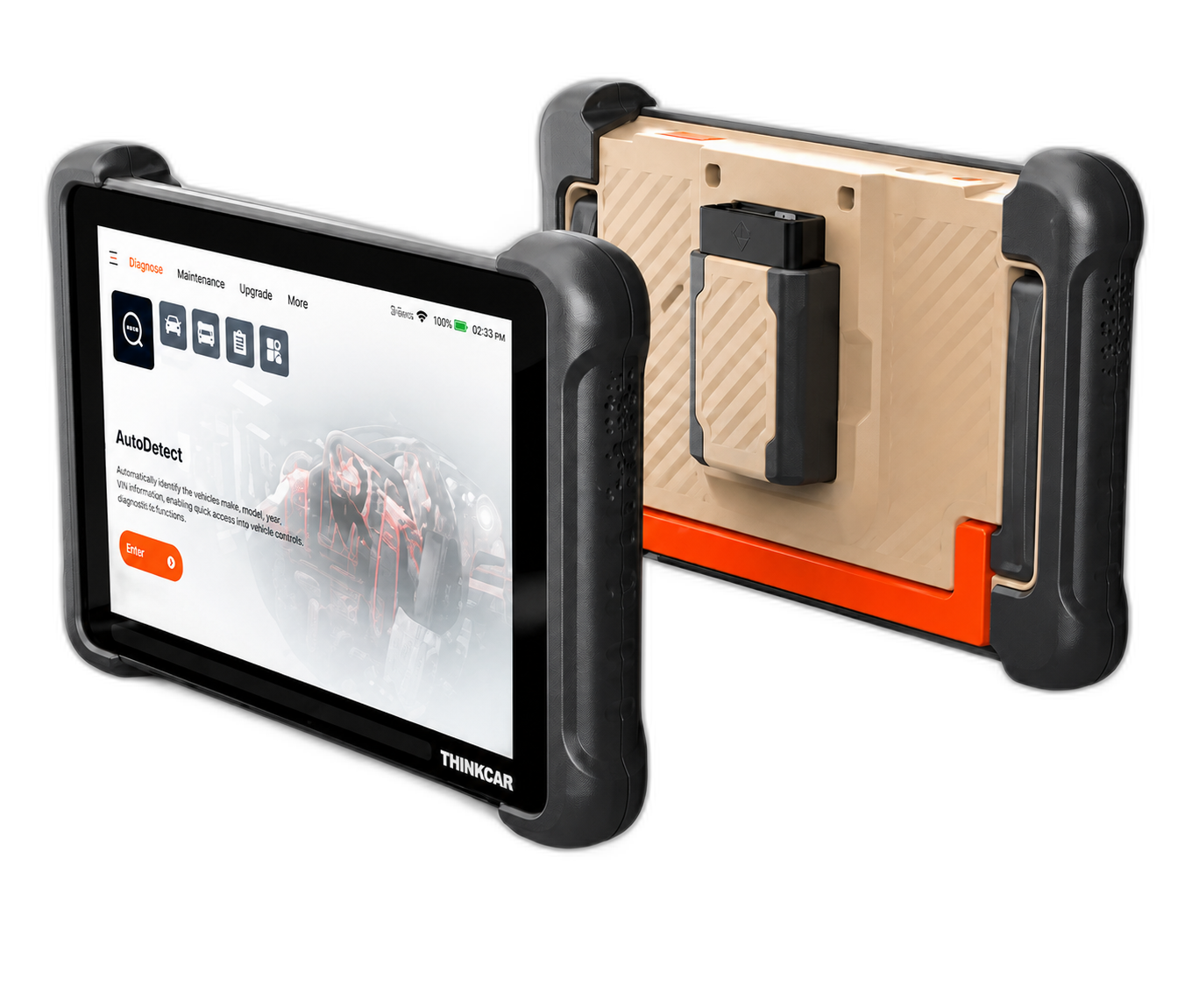
After cleaning, after a battery disconnect, or after fitting a new throttle body, the ECU must relearn the closed position of the throttle plate. Without this step, the car will idle too high, too low, or hunt up and down, and code P2176 will appear. The reliable method is a scanner relearn: the technician selects throttle body adaptation or idle relearn in the service functions menu, the scanner commands the ECU through the procedure, and the job is confirmed in under five minutes. This is where a professional scanner earns its money. The THINKCAR Expert 191, available at MS Auto Tools for Rs 160,000, carries throttle adaptation and idle relearn in its service menu alongside more than 30 other reset functions, and it covers Toyota, Honda, Suzuki, Kia and Hyundai models sold in Pakistan. The genuine unit is in stock at MS Auto Tools — see it at https://msautotools.com/product.php?slug=thinkcar-expert-191 — and workshops can confirm current price and availability on WhatsApp at +92 300 0678111. A scanner that cannot do a relearn leaves the customer with a car that idles badly after a simple cleaning, and that customer does not come back.
When Replacement Is the Only Option
Replacement becomes necessary when the motor has failed, a position sensor is worn out, the plate shaft is loose, or the housing is cracked. On most Pakistani-market cars the throttle body comes as a sealed unit — sensors and motor are not sold separately — so the whole assembly is replaced. Genuine units are essential here: counterfeit throttle bodies are common in the market, and they cause exactly the faults they are supposed to fix. A fake unit may look identical, but its position sensors drift with heat, its motor is weaker, and its plate does not seal properly, so the car hunts at idle and throws P2135 within weeks. Worse, a faulty throttle body can cause sudden unintended acceleration or a complete loss of power. MS Auto Tools supplies only genuine diagnostic tools and genuine parts channels, and warns every workshop against counterfeit scanners and counterfeit sensors — a fake tool that misreads a throttle sensor can send a technician down the wrong repair path and cost the customer a new throttle body they never needed. After fitting a new unit, a scanner relearn is mandatory, followed by a road test and a final scan to confirm no codes return. The total job — genuine part, gasket, fitting and relearn — typically runs Rs 55,000 to Rs 140,000 depending on the car.
What This Means for Your Workshop
Throttle body work is a steady earner for Pakistani workshops because the fault is common and the diagnosis is quick. A workshop that can scan, read live data, test the actuator and perform a relearn can turn a throttle complaint around in under two hours and charge fairly for each step: Rs 1,500 to Rs 2,500 for the diagnostic scan, Rs 2,500 to Rs 5,000 for cleaning, and a relearn included in the service. The key investment is a scanner with proper service functions — throttle adaptation, idle relearn, and live data graphing for both position sensors. Entry-level code readers cannot do a relearn, which means the workshop either sends the customer away or does the job halfway. The THINKCAR Expert 191 at Rs 160,000 is a popular choice for this work because it combines full-system diagnostics with CAN FD and DoIP support for newer cars, so the same tool handles a 2018 Corolla and a 2025 Sportage. Genuine tools from MS Auto Tools come with warranty and support, and the team can advise which scanner fits your workshop's car mix — message +92 300 0678111 on WhatsApp.
Frequently Asked Questions
Can I drive with a faulty throttle body?
You can drive short distances if the car still responds to the pedal, but it is not safe to delay the repair. A sticking plate or a failing sensor can put the car into limp mode without warning, leaving you with very little power in fast traffic. Get the car scanned the same day the fault appears.
Why does my car idle high after the throttle body was cleaned?
The ECU still remembers the old, dirty closed position. After cleaning, the plate closes further than before, and the ECU needs a throttle relearn to learn the new closed position. Without it, idle stays high or hunts. A scanner relearn fixes it in minutes.
What does limp mode mean on a Corolla or Civic?
Limp mode is the ECU protecting the engine when throttle data cannot be trusted. Power is limited to about 2,000 rpm and the car will not go faster than roughly 40 to 60 km/h. It is a safety mode, not a breakdown — but the underlying fault must be diagnosed before the car is driven normally again.
How much does throttle body cleaning cost in Pakistan?
A professional cleaning job at a workshop costs Rs 2,500 to Rs 5,000, including cleaner and a new gasket. A diagnostic scan before the work is usually Rs 1,500 to Rs 2,500. Replacement of the whole unit with a genuine part costs Rs 55,000 to Rs 140,000 depending on the car model.
Can a weak battery cause throttle body fault codes?
Yes. Low system voltage during cranking can trigger throttle actuator codes even when the throttle body is healthy. A good workshop checks battery voltage and charging before condemning the throttle body, especially on cars that also show slow cranking.
Which scanner do I need for throttle relearn on Pakistani cars?
You need a professional scanner with throttle adaptation and idle relearn in its service functions — a basic code reader cannot do it. The THINKCAR Expert 191 (Rs 160,000 at MS Auto Tools) covers Toyota, Honda, Suzuki, Kia and Hyundai models sold in Pakistan and includes the relearn function. Confirm availability on WhatsApp at +92 300 0678111.
If your Corolla, Civic, Swift, Sportage or Tucson is idling roughly, stalling or dropping into limp mode, do not guess — get it scanned. A proper diagnosis takes under an hour and usually ends with a simple cleaning and a relearn, not an expensive replacement. For a genuine scanner that can diagnose and relearn throttle faults, or for advice on the right tool for your workshop, contact MS Auto Tools on WhatsApp at +92 300 0678111. Genuine tools, warranty support, and delivery across Pakistan.