
Electric Car Charging Faults: Onboard Charger & Port Diagnostics (2026 Pakistan Guide)
2026-11-29 18:04:29 · by MS Auto Tools
Electric Car Charging Faults: Onboard Charger & Port Diagnostics (2026 Pakistan Guide)
Your electric car is plugged in, the charger shows a green light, but the battery percentage is not moving — or worse, the car shows a charging error and refuses to charge at all. In Pakistan, where home charging runs on 220 volt single-phase supply and voltage swings are a daily reality, charging faults are now one of the fastest-growing complaints at EV workshops in Lahore, Karachi and Islamabad. This guide explains how EV charging actually works, how to tell whether the fault is in the onboard charger, the charge port, the wall charger or the power supply, and which diagnostic tools find the answer in minutes instead of hours.
How EV Charging Works — and Where It Goes Wrong in Pakistan
An electric car does not charge directly from the wall socket. The AC power from your home or office passes through the onboard charger, a unit built into the car that converts 220 volt AC into the DC voltage the battery needs. The onboard charger also talks to the charging station through the charge port, agreeing on how much current is safe to draw. If any part of that conversation fails, charging stops.
In Pakistan, most EVs charge at home on a 7 kilowatt AC wall box, taking 6 to 8 hours for a full charge. Public DC fast chargers bypass the onboard charger entirely and feed DC straight to the battery, which is why a car that refuses to charge at home will often charge fine at a DC station — and that single test already tells a technician a great deal. The EVs most commonly seen in Pakistani workshops are the BYD Atto 3, MG ZS EV, Audi e-tron, BMW iX, Honri, and the Dewan Honri, along with imported Toyota Prius plug-in and Nissan Leaf models.
Three charging faults dominate Pakistani workshops in 2026. First, the onboard charger fails or derates because of heat and voltage fluctuation. Second, the charge port or its locking actuator is damaged, so the car cannot confirm the plug is connected. Third, the car rejects the charger because of a communication fault on the pilot signal — the small control wire that lets the car and charger negotiate. Each fault has different symptoms, and a proper diagnostic scanner can separate them in one session.
Step 1: Start With the Free Checks — Cable, Socket and Power Supply
Before touching a scanner, check the basics. Plug the charging cable in firmly and listen for the click of the port lock. On a BYD Atto 3 or MG ZS EV, a small actuator locks the plug in place; if it does not engage, the car will not start charging. Look at the charge port for bent pins, burnt marks, water or dust — a port that has been used in rain or left uncovered often has corrosion on the pins, and one dirty pin is enough to stop the whole session.
Check the power supply next. Measure the voltage at the wall box while charging: it should read 220 to 240 volts. In many Pakistani homes, voltage drops to 180 volts or lower in the evening peak hours, and most onboard chargers will refuse to charge or will drop to a very slow rate below 200 volts. Load shedding and generator changeovers cause the same problem — a charger that loses power mid-session may lock the car into a fault state that needs a manual reset. If the same car charges normally at a different location, the fault is in your supply, not the car.
Try the other charging mode as a test. If AC home charging fails but DC fast charging works, the onboard charger or the AC charge port circuit is the suspect, because DC charging bypasses both. If neither AC nor DC charging works, the fault is more likely in the battery management system, the high-voltage interlock, or the charge port communication wiring that both modes share. That one comparison saves hours of guessing.
Step 2: Read the Fault Codes — Charging Faults Live in Modules a Basic Scanner Cannot See
A basic OBD2 code reader will usually show nothing for a charging fault, because charging faults live in the onboard charger module, the battery management system and the body control module — not in the engine module a cheap reader talks to. Workshops need a full-system scanner that covers EV and hybrid systems to read these codes.
Common charging fault codes include P0D27 (onboard charger fault), P1E00 or P0AA6 (high-voltage isolation fault), U0293 (lost communication with the onboard charger), and P33E8 (charge port temperature too high). On a BYD Atto 3, the onboard charger module reports over-temperature and input over-voltage faults separately, which is useful: an over-voltage code points at your home supply, while an over-temperature code points at the charger unit itself. On the MG ZS EV, charge port lock actuator faults appear as body control codes, not charging codes, so a scanner that only reads the battery module will miss them entirely.
Live data is just as important as the codes. A proper scanner shows the pilot signal state, the charge port temperature, the onboard charger input voltage and current, and the battery management system's charge permission flag. If the pilot signal is missing, the problem is the cable or the wall box. If the pilot signal is present but the battery management system refuses charge permission, the fault is inside the car. This is the kind of step-by-step diagnosis that separates a professional EV workshop from one that replaces parts on guesswork.
Step 3: The Onboard Charger — Symptoms, Causes and Repair Costs in Pakistan
The onboard charger is the most expensive charging component in the car, and the most commonly misdiagnosed. The classic symptom is a car that charges very slowly — 1 to 2 kilowatts instead of 7 — or that charges for a few minutes and then stops with an error. On the Audi e-tron and BMW iX, a failing onboard charger often shows a red charging light and a dashboard message about the charging system, while the car still drives normally.
Heat is the main killer. The onboard charger sits in a hot engine bay, and in Pakistani summer temperatures of 45 degrees and above it runs close to its thermal limit. Add voltage fluctuation from an unstable grid and the charger derates itself to protect the battery, which owners experience as slow charging. A second cause is water ingress: chargers mounted low in the car can suffer after driving through flooded streets during monsoon, a real risk in Karachi and Lahore.
Repair costs in 2026 are significant. Onboard charger diagnosis at a proper EV workshop costs Rs 5,000 to Rs 15,000. A replacement onboard charger unit costs Rs 250,000 to Rs 600,000 depending on the model — a BYD Atto 3 unit is at the lower end, while Audi e-tron and BMW iX units are at the top. Some units can be repaired at component level by specialist electronics workshops for Rs 50,000 to Rs 150,000, but that needs proper high-voltage training and equipment. Never let an untrained mechanic open a high-voltage charger: the DC bus inside carries 400 volts, and a mistake can be fatal.
Step 4: Charge Port and Cable Faults — The Cheap Fix Most Owners Miss
Charge port faults are far cheaper than onboard charger faults and far more common. The symptoms are a plug that will not lock, a charging session that starts and stops repeatedly, or a car that charges only when the cable is held at a certain angle. The cause is usually mechanical: a worn locking actuator, a bent pin, or a damaged port seal that lets in dust and rain.
The locking actuator is a small motor that holds the plug in place during charging. On the MG ZS EV and BYD Atto 3 it is a known wear item, and a replacement actuator costs Rs 15,000 to Rs 40,000 including labour. A full charge port replacement costs Rs 60,000 to Rs 150,000 depending on the model. Before replacing anything, clean the port with electrical contact cleaner and inspect the pins under a light — many so-called port failures are simply corrosion that a ten-minute clean fixes.
Cables cause faults too. A charging cable that has been run over, kinked or left in the sun develops internal breaks that show up as intermittent charging. Test with a different cable before condemning the car: if a borrowed cable charges normally, the fault is the cable, not the car. Genuine Type 2 and CCS2 cables cost Rs 25,000 to Rs 60,000 in Pakistan, while cheap unbranded cables often have undersized wiring that overheats and triggers the car's thermal protection.
Step 5: Battery Management System, Isolation Faults and Safety Lockouts
If both AC and DC charging fail, look at the battery management system. The most serious code is an isolation fault, which means high-voltage electricity is leaking to the car body — usually because of water in the battery pack or damaged high-voltage cabling. The car will refuse to charge and often refuses to drive as well. This is a safety lockout, not a fault to be cleared and ignored: clearing an isolation code without finding the leak risks electric shock and battery fire.
Other battery management faults that block charging include a single cell group with low voltage, a battery temperature sensor fault, or a high-voltage interlock loop that is open because a connector is loose or a service plug is not seated. A full-system scanner with EV coverage reads cell voltages individually — on a BYD Atto 3 with a 60 kilowatt-hour pack, a healthy pack shows all cell groups within 0.05 volts of each other. One group reading 0.3 volts lower than the rest points to a failing cell, and the car will refuse fast charging to protect it.
These are high-voltage systems, and the safety rules are absolute. Always wear insulated gloves rated to 1,000 volts, use a CAT III or CAT IV rated meter, and never work on a live high-voltage circuit without proper training. Workshops that take EV charging work seriously invest in the right diagnostic equipment and the right safety gear before they take the first job.
The Tool That Diagnoses EV Charging Faults Properly
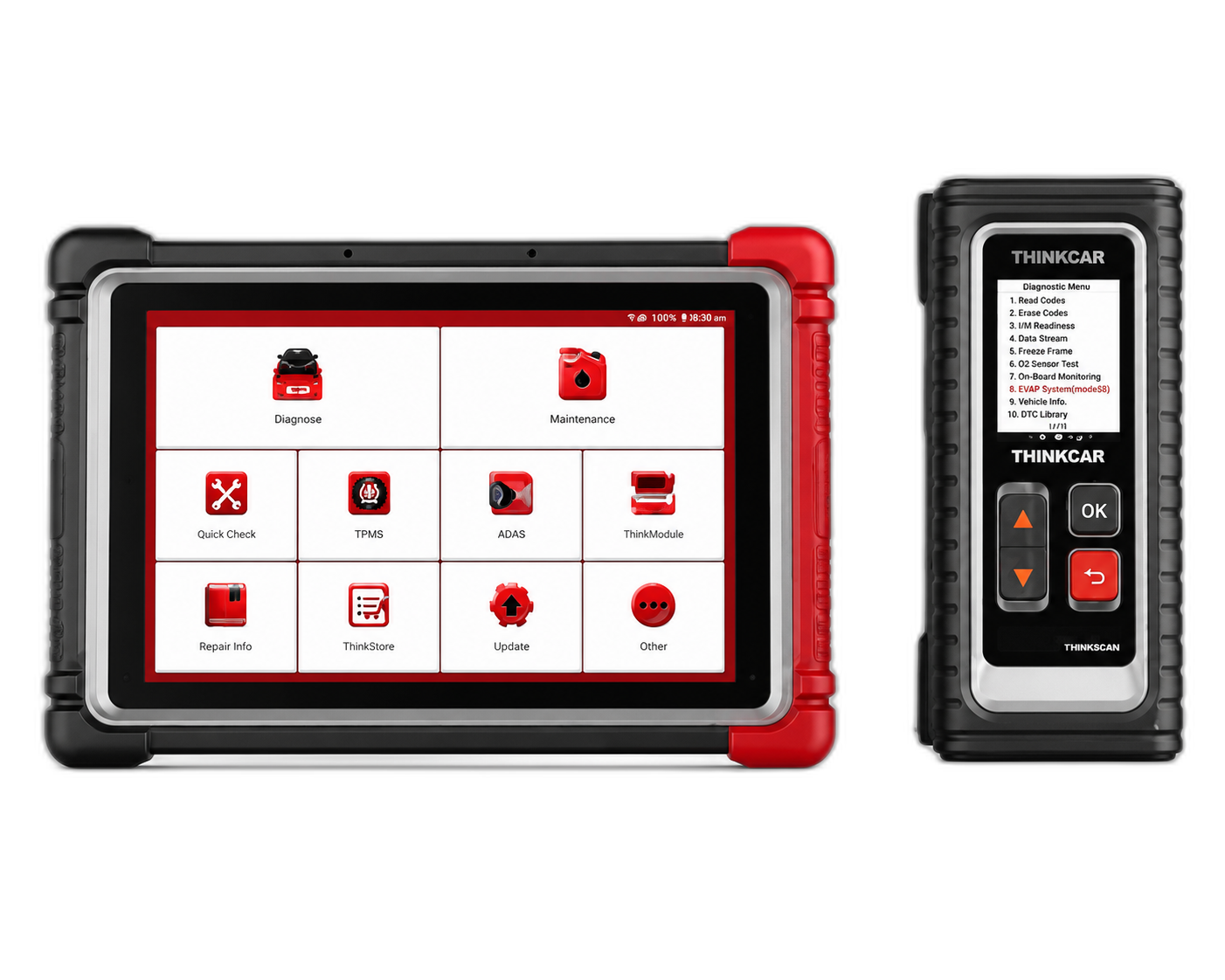
For workshops moving into EV service, the THINKCAR-THINKTOOL Expert 195 is the most practical diagnostic scanner for charging fault work. It is an OE-level full-system scanner with CAN FD and DoIP coverage, which matters because 2023 and newer EVs use CAN FD and DoIP protocols that older scanners cannot read at all. It reads the onboard charger module, the battery management system, the charge port and body control modules, and it shows live data for the pilot signal, cell voltages and charge port temperature in one session. It is available in Pakistan at Rs 250,000 from MS Auto Tools, and it also covers Toyota Corolla, Honda Civic, Suzuki Swift, Kia Sportage and Hyundai Tucson, so it earns its money on petrol cars as well as EVs.
For workshops that already own a full-system scanner, a second useful tool is the Thinkdiag 2 at Rs 65,000, which handles full-system diagnostics on most EVs and hybrids and is small enough to carry to a customer's home for a charging fault callout. A home visit to diagnose a wall box and supply problem is a service most EV owners in Pakistan will pay for, because the fault is often in the house, not the car.
If you are a workshop owner and EV charging faults are starting to arrive at your door, message MS Auto Tools on WhatsApp at +92 300 0678111 for the genuine THINKCAR-THINKTOOL Expert 195 at Rs 250,000 with warranty and delivery across Pakistan. Genuine tools with proper software updates are the only safe option for high-voltage work — counterfeit scanners can misread EV fault codes, miss isolation faults, and put your technicians at risk.
Warning: Counterfeit Scanners Are Dangerous on Electric Cars
This warning matters more for EVs than for any petrol car. A fake or cloned scanner can report the wrong fault codes, fail to read the battery management system at all, or show normal readings on a pack that has a real isolation fault. A technician who trusts a fake scanner can clear a safety lockout and hand back a car that should not be driven. Buy only genuine tools from an authorised seller, check the serial number with the manufacturer, and never use an unbranded device on a high-voltage system. MS Auto Tools sells 100 percent genuine Autel, Launch, Xhorse, Thinkcar, OBDSTAR and XTOOL equipment with warranty and after-sales support.
How to Prevent EV Charging Faults in Pakistan
Install the home wall box on a dedicated circuit with proper earthing and a 32 amp breaker — a shared circuit with the house load is the most common cause of voltage drop during charging. Use a voltage stabiliser or a servo stabiliser on the charging circuit if your area sees regular voltage swings below 200 volts. Keep the charge port covered when not in use, and clean it every few months with electrical contact cleaner. Avoid charging during load shedding changeovers and generator switchovers, which send voltage spikes into the onboard charger. In summer, charge in the evening or in shade where possible, because a hot onboard charger derates and charges slowly. Finally, have the charging system scanned once a year: a full-system scan catches a weakening onboard charger or a drifting cell group months before it becomes a no-charge breakdown.
When to Call a Professional EV Workshop
Call a professional if the car charges on DC but not on AC, if the same fault appears at two different chargers, if the dashboard shows a red charging warning, or if the scanner reports an isolation fault or a battery management fault. These are signs of an onboard charger, charge port or battery fault that needs proper equipment. Do not keep plugging and unplugging the charger dozens of times — repeated failed sessions can lock the charging system and make the diagnosis harder. And never attempt to open the onboard charger or the battery pack yourself: the high-voltage system inside can kill.
Frequently Asked Questions
Why is my EV charging very slowly at home in Pakistan?
The most common cause is low voltage. If your home supply drops below 200 volts in the evening, most onboard chargers derate to 1 to 2 kilowatts or stop entirely. Check the voltage at the wall box while charging. Heat is the second cause: an onboard charger running at 45 degrees derates to protect itself. If the car charges at full speed at a public charger, the fault is your home supply, not the car.
Why does my EV charge on DC fast charging but not at home on AC?
DC fast charging bypasses the onboard charger and feeds the battery directly, so this pattern points at the onboard charger or the AC charge port circuit. Read the onboard charger fault codes with a full-system scanner — codes like P0D27 confirm an onboard charger fault, while a missing pilot signal points at the cable or wall box.
What does a charge port lock actuator fault mean on a BYD Atto 3 or MG ZS EV?
It means the small motor that locks the charging plug in place has failed or is jammed. The car will not start charging without the lock engaged. A replacement actuator costs Rs 15,000 to Rs 40,000 including labour. Check for dirt or corrosion in the port first, because cleaning often fixes it.
How much does an onboard charger replacement cost in Pakistan in 2026?
Diagnosis costs Rs 5,000 to Rs 15,000. A replacement onboard charger unit costs Rs 250,000 to Rs 600,000 depending on the model — BYD Atto 3 at the lower end, Audi e-tron and BMW iX at the top. Some units can be repaired at component level for Rs 50,000 to Rs 150,000 by a specialist high-voltage workshop.
Can a normal OBD2 scanner diagnose EV charging faults?
Usually not. Charging faults live in the onboard charger module, the battery management system and the body control module, and a basic code reader only talks to the engine module. You need a full-system scanner with EV coverage, such as the THINKCAR-THINKTOOL Expert 195, which reads all of these modules and shows live data for the pilot signal and cell voltages.
Is it safe to clear an EV isolation fault code and keep driving?
No. An isolation fault means high-voltage electricity is leaking to the car body, usually from water in the battery pack or damaged cabling. Clearing the code without finding the leak risks electric shock and battery fire. The car must be inspected by a trained high-voltage technician before it is driven or charged again.
Conclusion
EV charging faults in Pakistan usually come down to four things: low or unstable home voltage, a worn charge port or locking actuator, a heat-stressed onboard charger, or a battery management safety lockout. The fastest diagnosis is to compare AC and DC charging, check the voltage at the wall box, and read the fault codes with a full-system scanner that covers EV modules. For workshops, the THINKCAR-THINKTOOL Expert 195 at Rs 250,000 is the tool that turns EV charging complaints into proper, billable diagnosis instead of guesswork.
For genuine THINKCAR diagnostic tools with warranty and delivery across Pakistan, message MS Auto Tools on WhatsApp at +92 300 0678111. The THINKCAR-THINKTOOL Expert 195 (Rs 250,000) is in stock — order today and be ready for the electric cars already arriving at workshops across Pakistan.