Diagnostic Scanner Accessories: VCI, Cables & Adapters Workshops Need (2026 Pakistan Guide)
2026-11-28 14:04:31 · by MS Auto Tools
A diagnostic scanner on its own cannot talk to every car. The scanner is the brain, but the VCI, the cables and the adapters are its hands — and if any one of them is missing, damaged or counterfeit, the scanner simply cannot connect. Many workshops in Pakistan buy a good scanner and then lose jobs because they do not have the right adapter for a 24-volt truck, the right cable for a pre-OBD2 Suzuki, or a stable power supply for ECU programming. This guide covers every accessory a workshop actually needs in 2026: what each one does, which cars it covers, what it costs in PKR, and what to buy first if your budget is limited.
The VCI: The Heart of Your Scanner Setup
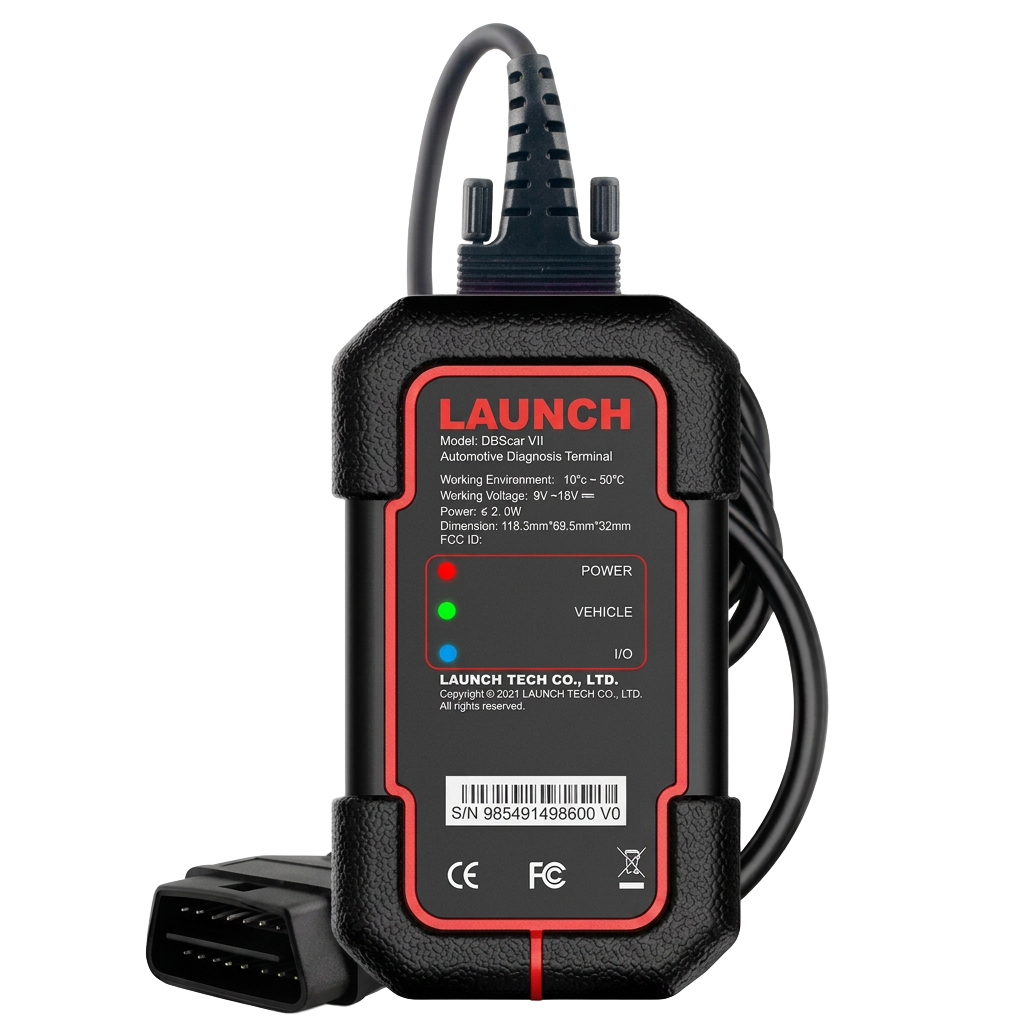
VCI stands for Vehicle Communication Interface. It is the small box or dongle that plugs into the car's OBD2 port on one side and talks to your tablet or phone on the other — by Bluetooth, Wi-Fi or USB cable. When you buy a modern Bluetooth scanner, the VCI is the product: the Launch DBScar VII, available from MS Auto Tools for Rs 75,000 in 2026, is a VCI that pairs with your phone or tablet and gives full-system diagnostics with CAN FD and DoIP support. The Thinkdiag 2 at Rs 65,000 is the same idea — a compact VCI with a two-year software update included.
The VCI matters more than the tablet you run it on, because it decides which protocols your scanner speaks. An old VCI that only speaks CAN and K-Line cannot talk to a 2023 or newer Toyota Corolla Cross, Honda Civic or Kia Sportage that uses CAN FD, and it cannot do DoIP diagnostics on newer European cars at all. When you buy a VCI, check three things: that it supports CAN FD and DoIP, that its software updates are included for at least one year, and that it is a genuine unit with a serial number the manufacturer recognises. A counterfeit VCI is the most common way workshops waste money in Pakistan — it pairs, it reads basic engine codes, and then it fails on ABS, airbag and transmission modules, which is exactly where the money is. MS Auto Tools sells only genuine Autel, Launch, Xhorse, Thinkcar, OBDSTAR and XTOOL units with warranty, so a VCI bought there is registered, updatable and supported.
One practical tip: keep a spare VCI in the workshop. A VCI is small, it gets dropped, its Bluetooth chip fails, and its battery or charging port wears out. When your only VCI dies on a busy Saturday, every diagnostic job stops. A second VCI such as the THINKCAR ScanMate at Rs 25,000 is cheap insurance — it covers full-system scans on most Pakistani cars and keeps the workshop earning while the main VCI is repaired or replaced.
OBD2 Cables and Extension Cables
Every scanner comes with at least one OBD2 cable, but the cable in the box is rarely enough for daily workshop use. The OBD2 port on a Toyota Corolla sits under the dashboard on the driver's side, easy to reach. On a Honda Civic it is tucked behind the centre console. On a Suzuki Swift it is low under the steering column. On many cars the port is in an awkward position where a short cable forces the tablet to hang in mid-air or rest on the customer's seat. An OBD2 extension cable, usually 1.5 to 3 metres long and costing roughly Rs 2,000 to Rs 5,000, solves this completely: plug one end into the car, run the other end out to your workbench, and diagnose in comfort.
Buy extension cables with proper shielding and solid connectors. Cheap unshielded cables pick up electrical noise from the car's ignition system, and that noise shows up as communication errors — the scanner drops the connection mid-scan, or reports modules that are not really faulty. For a workshop doing ten or more scans a day, a good extension cable pays for itself in a week of avoided frustration. Also keep at least one spare OBD2 cable in stock: cables are the most frequently damaged accessory in any workshop, bent, crushed under a seat rail or chewed by a customer's pet, and a broken cable looks identical to a dead scanner until you swap it.
For wired VCIs, a quality USB cable matters just as much. Use the cable that came with the VCI, or a branded replacement of the same specification. A charging-only USB cable with no data wires will power the VCI but never transfer a single byte, and it is one of the most common causes of "scanner not connecting" complaints that are not the scanner's fault at all.
Adapters for Older Cars and Special Connectors
Not every car in Pakistan has a standard 16-pin OBD2 port. Suzuki Mehran, older Suzuki Cultus, older Toyota Corolla models and many 1990s Japanese imports use older connectors — 12-pin, 14-pin or 20-pin plugs that a standard OBD2 cable cannot fit. Without the right adapter, those cars are simply undiagnosable with a modern scanner, and in a market where old cars are a large share of workshop traffic, that is lost income.
A basic adapter set covers the common older connectors: Toyota 17-pin and 22-pin, Honda 3-pin, Nissan 14-pin, Suzuki 12-pin, and the BMW 20-pin round connector found on older BMWs and some Mercedes models. A full adapter kit from a reputable brand costs roughly Rs 15,000 to Rs 35,000 depending on how many pieces it includes, and it turns "sorry, we cannot scan this car" into a paying job. Check before buying that the adapters fit your VCI — most are brand-specific, and an Autel adapter will not fit a Launch VCI.
Motorcycles need adapters too. Many workshops are now asked to diagnose motorcycles, and bikes from Honda, Yamaha and Suzuki use small 4-pin or 6-pin diagnostic connectors that are nothing like a car OBD2 port. A motorcycle adapter set, roughly Rs 8,000 to Rs 20,000, opens a whole new line of business. If you want the full picture on bike diagnostics, the motorcycle diagnostics guide on this blog explains which scanners actually read bikes.
What to check on WhatsApp before you spend a rupee: message MS Auto Tools on WhatsApp at +92 300 0678111 with your scanner's brand and model, and ask which adapter set fits it and which older cars it covers. Buying an adapter that does not fit your VCI is the most common accessory mistake, and a two-minute message prevents it. Genuine accessories with warranty are the only safe buy — counterfeit adapters sold online often have wrong pin wiring, and wrong wiring can damage a car's ECU.
Heavy-Duty 24V Adapters and Truck Connectors
Cars run on 12 volts. Trucks, buses, Hino, Isuzu and many Chinese trucks on Pakistani roads run on 24 volts, and they use different diagnostic connectors — usually 9-pin Deutsch or 6-pin connectors instead of the car's 16-pin OBD2. A car VCI plugged into a 24-volt system without the right adapter can be damaged, and it certainly will not communicate.
If your workshop takes truck and bus work, you need a 24V adapter set and a VCI that supports heavy-duty protocols such as J1939 and J1708. The Launch X431 Pro V5.0 at Rs 290,000 covers trucks and buses with the right adapters, and the Autel MaxiSys MS906BT at Rs 260,000 does the same. A truck adapter set itself costs roughly Rs 20,000 to Rs 45,000, and it pays for itself with a single fleet job — a single truck diagnostic typically charges Rs 5,000 to Rs 15,000, and a fleet contract is worth far more.
Do not improvise with 24V systems. A homemade adapter or a car cable forced into a truck connector can send 24 volts into a 12-volt VCI and destroy it in seconds. Buy the proper adapter, label it clearly so nobody grabs it for a car by mistake, and keep it in a separate, marked pouch.
Power Supplies and Voltage Stabilisers
This is the accessory most workshops forget and the one that causes the most expensive damage. ECU programming, key programming and module coding all require stable voltage — usually between 13 and 14 volts — for the entire procedure. If the car's battery voltage drops mid-programming, the ECU can be bricked, and a bricked ECU on a Corolla or Civic costs Rs 40,000 to Rs 120,000 to replace, plus coding.
A battery maintainer or stabiliser holds the voltage steady while you program. A decent workshop-grade maintainer costs roughly Rs 25,000 to Rs 60,000, which is less than a single bricked ECU. It is essential for any job that writes to a module: ECU cloning, key programming with tools like the Autel MaxiIM KM100 at Rs 110,000, IMMO work, and software updates. For simple code reading and clearing, a healthy battery is enough — but if the battery is weak, even a basic scan can behave strangely, with modules dropping offline and phantom fault codes appearing.
Keep a battery tester in the workshop as well. Testing the battery before a diagnostic session takes two minutes and prevents hours of chasing faults that are really just low voltage. A battery that reads below 12.2 volts at rest is a suspect in every diagnosis that follows.
Storage, Cases and Cable Care
Accessories fail from neglect more than from use. A VCI thrown loose into a toolbox gets its connector pins bent. Cables coiled too tightly break internally. Adapters lost in a drawer are as good as never bought. Spend a small amount on proper storage: a hard case with foam cut-outs for the VCI, labelled pouches for each adapter set, and a cable reel or hook board on the wall. A proper case costs Rs 3,000 to Rs 8,000 and protects accessories worth ten times that.
Two habits save money every month. First, coil cables loosely in wide loops, never wrap them tight around your hand or elbow — tight coils break the copper inside the insulation, and the cable then fails intermittently, which is the hardest fault to find. Second, inspect connector pins monthly. A bent pin on an adapter can short two circuits in a customer's car, and that short can damage a module. Five minutes with a magnifier and a straight pick prevents it.
What to Buy First: A Starter Kit by Budget
If you are setting up a workshop or upgrading your accessories, buy in this order. First, the VCI itself — a genuine Launch DBScar VII at Rs 75,000 or a Thinkdiag 2 at Rs 65,000, both available from MS Auto Tools with warranty and software updates. Second, an OBD2 extension cable and one spare OBD2 cable, roughly Rs 5,000 to Rs 8,000 together. Third, a battery maintainer, roughly Rs 25,000 to Rs 60,000, before you attempt any programming work. Fourth, the older-car adapter set, roughly Rs 15,000 to Rs 35,000. Fifth, the truck 24V adapter set, roughly Rs 20,000 to Rs 45,000, only if you take heavy-vehicle work.
A sensible starter accessories budget, on top of the scanner itself, is Rs 50,000 to Rs 100,000. That sounds like a lot until you compare it with one lost job a week: a single missed truck diagnostic is Rs 5,000 to Rs 15,000, a single missed older-car job is Rs 2,000 to Rs 5,000, and a single bricked ECU is Rs 40,000 or more. The accessories pay for themselves within the first month in any busy workshop.
Genuine Accessories vs Counterfeit: Why It Matters
Counterfeit accessories are everywhere in the Pakistani market — fake OBD2 cables with thin copper, fake adapters with wrong pinouts, fake VCIs with cloned serial numbers. A fake cable can work on one car and damage the next. A fake adapter with swapped pins can send battery voltage into a data line and kill a module. A fake VCI cannot be updated, cannot be registered, and has no warranty — when it fails, the money is simply gone.
Buy accessories from the same genuine source as your scanner. MS Auto Tools supplies genuine Autel, Launch, Xhorse, Thinkcar, OBDSTAR and XTOOL accessories with warranty, and the team can confirm on WhatsApp whether a particular adapter fits your exact scanner model. Check the serial number, check the packaging, and keep the receipt — a genuine accessory with warranty costs a little more and saves a great deal more.
Frequently Asked Questions
Q1. What is a VCI and do I need a separate one for each scanner?
A VCI is the Vehicle Communication Interface — the dongle that plugs into the car's OBD2 port and connects to your tablet or phone. Most modern scanners include their own VCI, such as the Launch DBScar VII or the Thinkdiag 2, and each VCI only works with its own brand's software. You cannot use an Autel VCI with a Launch app. Keep one VCI per scanner you own, plus a cheap spare such as the THINKCAR ScanMate at Rs 25,000.
Q2. Can I use any OBD2 cable with my scanner?
No. The main OBD2 cable is usually brand-specific, because the VCI end of the cable is a proprietary connector. Extension cables are universal on the car side, so a good quality OBD2 extension cable works with any scanner. Always use the cable supplied with your VCI, or a branded replacement of the same specification, and never use a charging-only USB cable for a wired VCI.
Q3. Which adapter do I need for older cars without an OBD2 port?
Older Suzuki, Toyota, Honda and Nissan models use 12-pin, 14-pin, 17-pin or 22-pin connectors. A basic older-car adapter set covering Toyota, Honda, Nissan and Suzuki costs roughly Rs 15,000 to Rs 35,000 and fits most pre-2000 cars still on Pakistani roads. Confirm compatibility with your VCI brand before buying — adapters are not interchangeable between brands.
Q4. Do I need a 24V adapter for trucks?
Yes, if you work on trucks or buses. Trucks use 24-volt systems and 9-pin or 6-pin Deutsch connectors, and a car VCI cannot connect to them without the right adapter. A truck adapter set costs roughly Rs 20,000 to Rs 45,000, and you also need a VCI that supports heavy-duty protocols, such as the Launch X431 Pro V5.0 at Rs 290,000.
Q5. Why does ECU programming need a battery maintainer?
Programming writes new software to a module, and if the voltage drops mid-write the module can be permanently damaged. A battery maintainer holds the voltage steady at 13 to 14 volts for the whole procedure. Without one, a single programming job on a Corolla or Civic can turn into a Rs 40,000 to Rs 120,000 ECU replacement.
Q6. How do I know if an accessory is genuine or counterfeit?
Buy from an authorised seller, check the serial number on the manufacturer's website, and check the packaging and build quality — genuine accessories have proper moulding, clear labelling and a warranty card. If the price is far below the market rate, it is almost certainly counterfeit. MS Auto Tools sells only genuine accessories with warranty, and you can confirm any product on WhatsApp at +92 300 0678111 before buying.
Conclusion
A scanner is only as good as the accessories behind it. The VCI decides which cars you can talk to, the cables decide whether the connection stays stable, the adapters decide whether older cars and trucks are jobs or refusals, and a battery maintainer decides whether programming is safe or a gamble. Buy genuine, buy in the right order, store everything properly, and the accessories will pay for themselves within weeks. For genuine VCIs, cables, adapters and maintainers with warranty and after-sales support, contact MS Auto Tools on WhatsApp at +92 300 0678111 — send your scanner's brand and model, and the team will tell you exactly which accessories fit it and what they cost in 2026.