
CVT Transmission Diagnostics: Nissan, Toyota & Honda CVT Issues (2026 Pakistan Guide)
2026-11-08 13:59:40 · by MS Auto Tools
CVT Transmission Diagnostics: Nissan, Toyota & Honda CVT Issues (2026 Pakistan Guide)
Continuously Variable Transmissions (CVTs) now power most of the cars on Pakistani roads — the Toyota Corolla Cross and Yaris, Honda City and Vezel, Nissan Dayz and Moco, Suzuki Swift and Wagon R, plus every imported JDM kei car. A CVT has no fixed gears: a steel belt runs between two pulleys that constantly change ratio, which is why these cars feel smooth and return better fuel economy. But when a CVT fails, it fails differently from a conventional automatic — and most workshops in Pakistan still diagnose it the wrong way. This guide explains the common CVT faults on Nissan, Toyota and Honda cars, the exact diagnostic workflow, and which scanner actually reads CVT data in 2026.
How a CVT Works — and Why It Fails Differently
A CVT replaces gear sets with a primary pulley, a secondary pulley and a steel belt or chain. Hydraulic pressure squeezes the pulleys to change ratio, and a torque converter (or a clutch pack on some Honda models) connects the engine. Because the belt never slips under normal conditions, wear is invisible until it is severe. The three most common failure modes in Pakistan are belt slip from worn pulleys, overheating of the CVT fluid, and valve body or stepper motor failure. Heat is the biggest enemy: in summer traffic in Lahore or Karachi, CVT fluid temperatures regularly cross 100°C, and every 10°C above the safe limit roughly halves the remaining life of the fluid.
Nissan CVT Problems: Judder, Whine and the Jatco Weakness
Nissan's Jatco CVT7 and CVT8 units — found in the Dayz, Moco, Note and imported X-Trail — are the most failure-prone CVTs in Pakistan. The classic symptom is judder or shudder between 20 and 60 km/h, often described by owners as the car "vibrating" under light acceleration. A high-pitched whine that rises with road speed points to belt and pulley wear, while a sudden loss of drive followed by a "limp mode" warning usually means the transmission control module has detected excessive belt slip and cut power to protect itself.
Common Nissan CVT fault codes include P0744 (torque converter clutch circuit), P0776 (pressure control solenoid B), P0841 (transmission fluid pressure sensor) and P17F0/P17F1 (judder detection — belt slip). If P17F0 or P17F1 is stored, the belt has already slipped; a fluid change alone will not fix it. A professional scanner must read the CVT "deterioration counter" — a value that tracks how much the fluid and belt have aged. On a healthy unit it sits below 50,000; above 210,000, Nissan recommends a full overhaul. Generic OBD2 readers cannot see this counter at all.
Toyota CVT Issues: Corolla Cross, Yaris and the K120 Direct Shift
Toyota's K120 Direct Shift-CVT, used in the Corolla Cross and Yaris, is more robust because it uses a physical launch gear for the first ratio before handing over to the belt. Even so, Pakistani workshops see three recurring problems: delayed engagement when shifting from Park to Drive (worn valve body or low fluid pressure), a flare or slip on hard acceleration, and overheating warnings on long motorway climbs in summer. The older K313 CVT in imported Aqua and Prius C models is more sensitive — its fluid must be changed every 40,000 km in our climate, not the 100,000 km the Japanese service book suggests.
Typical Toyota CVT codes are P2757 (torque converter clutch pressure control solenoid), P0793 (intermediate shaft speed sensor) and P2714 (pressure control solenoid D). Toyota also stores CVT fluid temperature history, which a good scanner can graph live. If the fluid has crossed 120°C more than a handful of times, expect shortened belt life even if the car currently drives fine.
Honda CVT Faults: Vezel, City and the Earth Dreams Unit
Honda's Earth Dreams CVT, fitted to the Vezel, City (1.5L) and Grace, is generally reliable but has its own pattern. The most common complaint in Pakistan is a shudder or "rubber band" feeling when pulling away from a stop — usually a worn start clutch or degraded fluid. A second pattern is a whining noise on the motorway that owners mistake for a wheel bearing. The third is complete drive loss after a jump-start or a flat battery, because Honda CVTs need a clutch-point relearn after power loss, and a workshop that skips it leaves the car slipping.
Honda CVT codes to know: P0741 (torque converter clutch stuck off), P0796 (pressure control solenoid C), P0843 (transmission fluid pressure sensor high) and P1890 (start clutch calibration). The start clutch calibration — a 10-minute relearn done through the scanner — fixes more Honda CVTs than any parts replacement, yet many workshops never perform it because their scanner cannot access the function.
The Diagnostic Workflow: From Code to Confirmed Fault
A proper CVT diagnosis follows five steps, and skipping any of them is how workshops waste their customers' money.
Step 1 — Read all modules, not just the engine. The transmission control module stores its own codes. A Rs 3,000 generic reader only talks to the engine ECU, so it reports "no codes" on a car with a failing CVT. You need a scanner with full-system diagnostics and live data for the TCM.
Step 2 — Check live data before clearing anything. Record CVT fluid temperature, primary and secondary pulley pressure, belt slip ratio, lock-up clutch status and the deterioration counter. Compare pulley pressures at idle and under load — a difference of more than 0.5 MPa between commanded and actual pressure points to a valve body or pump problem.
Step 3 — Test-drive with the scanner connected. Graph fluid temperature and slip ratio while driving. Judder that appears only above 90°C is a fluid problem; judder at all temperatures is a mechanical problem. This single test separates a Rs 18,000 fluid change from a Rs 250,000 overhaul.
Step 4 — Inspect the fluid. Healthy CVT fluid is translucent green (Nissan NS-3), red (Toyota FE) or amber (Honda HCF-2). Dark brown fluid with a burnt smell and metal particles means the belt is already shedding material — no fluid change will save it, and the customer must be told honestly.
Step 5 — Perform the relearn. After any fluid change, valve body work or battery disconnect, run the CVT relearn and clutch-point calibration through the scanner. Without it, the new fluid will be managed by the old learned values and the judder will return within days.
If your scanner cannot read CVT live data, TCM codes or the deterioration counter, you are guessing on every CVT job. WhatsApp MS Auto Tools on +92 300 0678111 for a scanner that can — genuine tools, workshop pricing and warranty included.
CVT Fluid: The Rs 18,000 Job That Saves a Rs 250,000 Gearbox
CVT fluid is not ATF, and the two must never be mixed. Each manufacturer specifies its own fluid — Nissan NS-3, Toyota CVT FE, Honda HCF-2 — and using the wrong one causes belt slip within weeks. In Pakistan's heat and stop-start traffic, the safe change interval is 40,000 km, half the Japanese recommendation. A full fluid change with filter costs the customer roughly Rs 18,000–25,000 including labour, while a CVT overhaul starts at Rs 250,000 and a replacement unit can exceed Rs 600,000 for a Vezel or Corolla Cross. The economics are obvious: sell the fluid service honestly, show the customer the dark fluid and the deterioration counter on the scanner screen, and you will never be short of CVT work.
Which Scanner Reads CVT Properly in Pakistan?
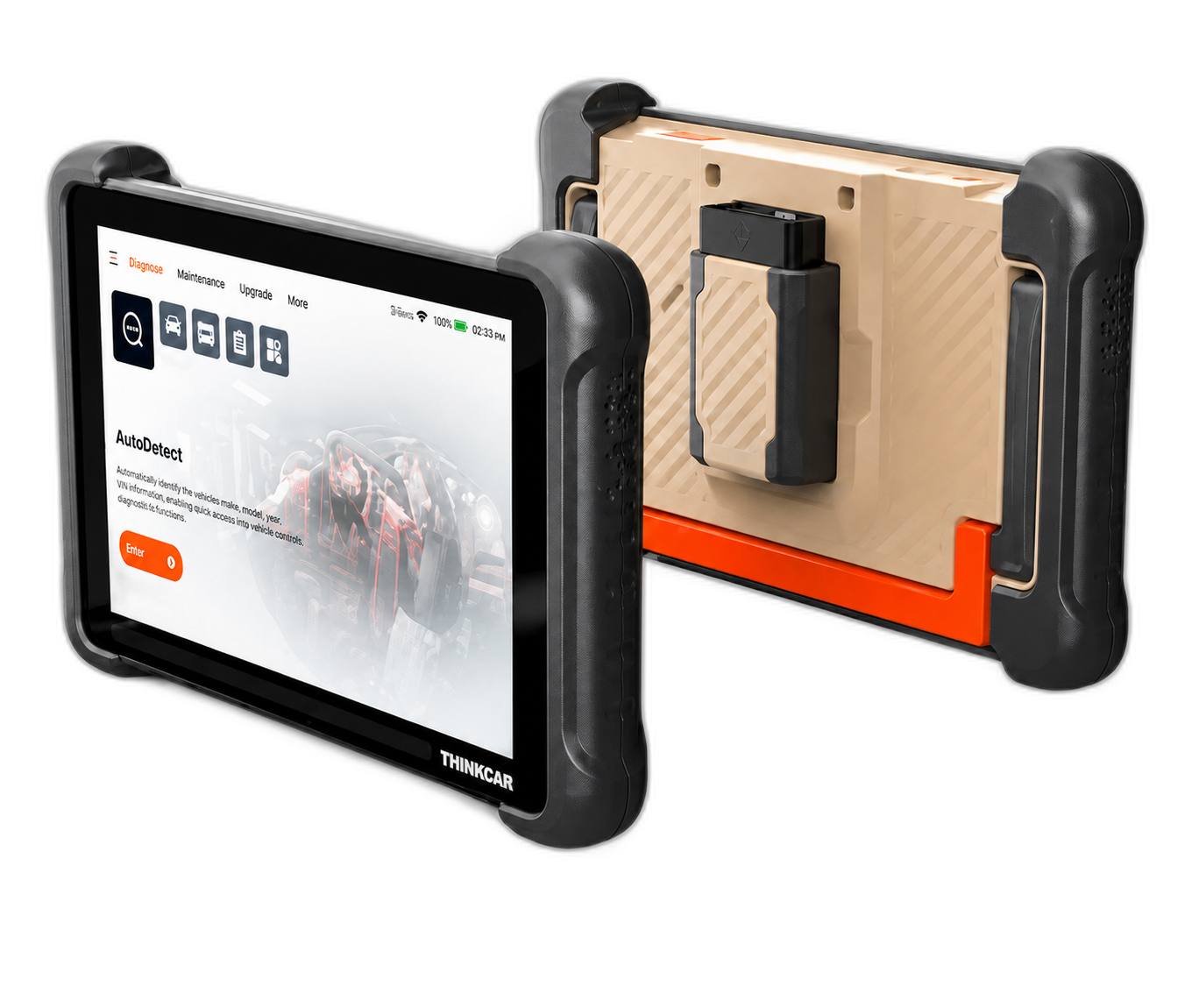
Not every scanner that claims "all-system diagnostics" can actually do CVT work. You need three things: access to the transmission control module, CVT-specific live data (pulley pressure, slip ratio, deterioration counter) and service functions (fluid counter reset, clutch relearn, valve body calibration). The Thinkcar Expert 191 (Rs 160,000) covers all three — it reads TCM codes on Nissan, Toyota and Honda, graphs pulley pressure and slip in real time, resets the CVT fluid deterioration counter and runs clutch relearns. Its 8-inch wireless tablet with CAN FD and DoIP also covers 2023+ models that older scanners cannot reach. See it here: https://msautotools.com/product.php?slug=thinkcar-expert-191
For workshops handling high CVT volume, the Launch X-431 Creader 919 MAX (Rs 165,000) is the other strong option, with deep Toyota and Honda coverage and a fast relearn routine. Both are available genuine with warranty from MS Auto Tools. A warning that matters: counterfeit scanners are common in Pakistani markets, and a fake unit may read engine codes while silently missing every TCM function — the exact functions a CVT job needs. A fake can also write wrong values during a relearn and damage the valve body. Buy from an authorised seller and keep the warranty card.
What to Tell the Customer (and What to Charge)
CVT work is profitable when it is honest. A diagnostic scan with live data and a printed report is worth Rs 2,000–3,000. A fluid and filter service with counter reset is Rs 18,000–25,000. A valve body replacement with relearn is Rs 80,000–120,000. A full overhaul starts at Rs 250,000 — and at that point, always show the customer the scanner evidence first. Workshops that explain the deterioration counter and the fluid condition on screen get the job approved far more often than workshops that just quote a price.
FAQ
Can a normal OBD2 scanner diagnose a CVT problem?
No. A basic OBD2 reader only talks to the engine ECU. CVT fault codes, live pulley pressure, belt slip data and the fluid deterioration counter live in the transmission control module, which needs a full-system scanner such as the Thinkcar Expert 191.
How often should CVT fluid be changed in Pakistan?
Every 40,000 km. Our summer heat and stop-start traffic age CVT fluid far faster than the 80,000–100,000 km intervals in Japanese service books. A fluid change costs Rs 18,000–25,000; a CVT overhaul starts at Rs 250,000.
What does CVT judder mean on a Nissan Dayz or Moco?
Judder between 20 and 60 km/h usually means belt slip. If codes P17F0 or P17F1 are stored, the belt has already slipped and a fluid change alone will not fix it — the unit needs inspection and likely an overhaul.
Why does my Honda Vezel shudder when pulling away?
Most often a worn start clutch or degraded HCF-2 fluid. After a battery disconnect the car also needs a start clutch calibration (relearn) done through a scanner — skipping it leaves the car slipping.
Is it safe to drive with a CVT warning light on?
No. The transmission is in limp mode to protect itself, and continued driving grinds the belt and pulleys. Drive gently to the nearest workshop and get the TCM codes read before the damage spreads.
Can I use ATF instead of CVT fluid?
Never. CVT fluid has a completely different friction formula. ATF in a CVT causes belt slip within weeks and can destroy the transmission. Always use the manufacturer's specified fluid — NS-3 for Nissan, CVT FE for Toyota, HCF-2 for Honda.
CVT cars are now the majority of what Pakistani workshops see, and the workshops earning the most from them are the ones that diagnose properly: full TCM scan, live pulley and slip data, fluid inspection, and a proper relearn after every service. The tools for that work cost less than a single CVT overhaul — the Thinkcar Expert 191 (Rs 160,000) pays for itself on the first few CVT jobs. For genuine scanners, honest advice and workshop pricing, WhatsApp MS Auto Tools on +92 300 0678111 or visit https://msautotools.com — and check the Thinkcar Expert 191 here: https://msautotools.com/product.php?slug=thinkcar-expert-191