
Crank & Cam Sensor Faults: No-Start After Sensor Failure (2026 Pakistan Guide)
2026-11-26 14:06:48 · by MS Auto Tools
Crank & Cam Sensor Faults: No-Start After Sensor Failure (2026 Pakistan Guide)
A customer turns the key, the engine cranks strongly, the battery is fine, there is fuel in the tank — but the engine never fires. In a Pakistani workshop, this is one of the most common no-start complaints, and in a large share of cases the culprit is a failed crankshaft or camshaft position sensor. These two small sensors tell the ECU exactly where the engine is in its rotation, and without their signal the ECU simply refuses to spark or inject fuel. This guide explains how crank and cam sensors work, the fault codes they trigger, how to test them properly with a scanner and a multimeter, and the fix that gets the car back on the road in 2026.
What Do Crank and Cam Sensors Actually Do?
The crankshaft position sensor, usually called the CKP sensor, watches a toothed reluctor wheel on the crankshaft and tells the ECU the engine's speed and the exact position of each piston. The camshaft position sensor, the CMP sensor, watches the camshaft and tells the ECU which cylinder is on its compression stroke, so the ECU knows the correct firing order.
If the crank sensor signal disappears, the ECU has no idea how fast the engine is turning or where the pistons are. Most ECUs respond by cutting both spark and fuel injection entirely, because firing at the wrong time could damage the engine. That is why a dead crank sensor produces the classic symptom: the engine cranks normally but never starts, with no spark at the plugs and no injector pulse. The cam sensor is slightly more forgiving. On many cars, if the cam sensor fails but the crank sensor still works, the ECU can fall back to a default firing sequence and the engine may start, but it will run rough and lack power.
Most cars on Pakistani roads — Toyota Corolla, Honda Civic, Suzuki Swift, Kia Sportage, Hyundai Tucson — use a magnetic or Hall-effect crank sensor mounted near the crankshaft pulley or flywheel, and a cam sensor on the cylinder head.
Symptoms of a Failing Crank or Cam Sensor
The most dramatic symptom is the no-start: the engine cranks but never fires. But sensors rarely die without warning. Before the total failure, customers usually report stalling without warning, often at a traffic signal, followed by a restart after a few minutes once the sensor cools down. The engine cranks for much longer than usual before starting, especially when hot, the car jerks or misfires under acceleration, and the check engine light comes on intermittently.
Heat is the key pattern. A failing crank sensor often works perfectly when cold and fails when the engine bay gets hot. The customer drives to the market, parks for twenty minutes, and then the car refuses to start until it has cooled down. If you hear that story, the crank sensor should be at the top of your suspect list, before the fuel pump and before the ignition coils.
Crank and Cam Sensor Fault Codes Explained
A professional scanner turns this guesswork into a diagnosis. The common codes are P0335 and P0336 for crank sensor circuit and performance faults, P0337 and P0338 for low and high crank sensor input, P0340, P0341 and P0344 for cam sensor circuit, performance and intermittent faults, and P0016 for crankshaft-camshaft correlation — which can mean a stretched timing chain or a jumped timing belt, not just a sensor fault.
A code alone is never the diagnosis. P0335 can be set by a failed sensor, but it can also be set by a damaged reluctor wheel, a wiring fault, a corroded connector, or a weak battery that makes the cranking speed too low for the sensor to generate a clean signal. The code tells you which circuit to investigate; the live data tells you what is actually wrong.
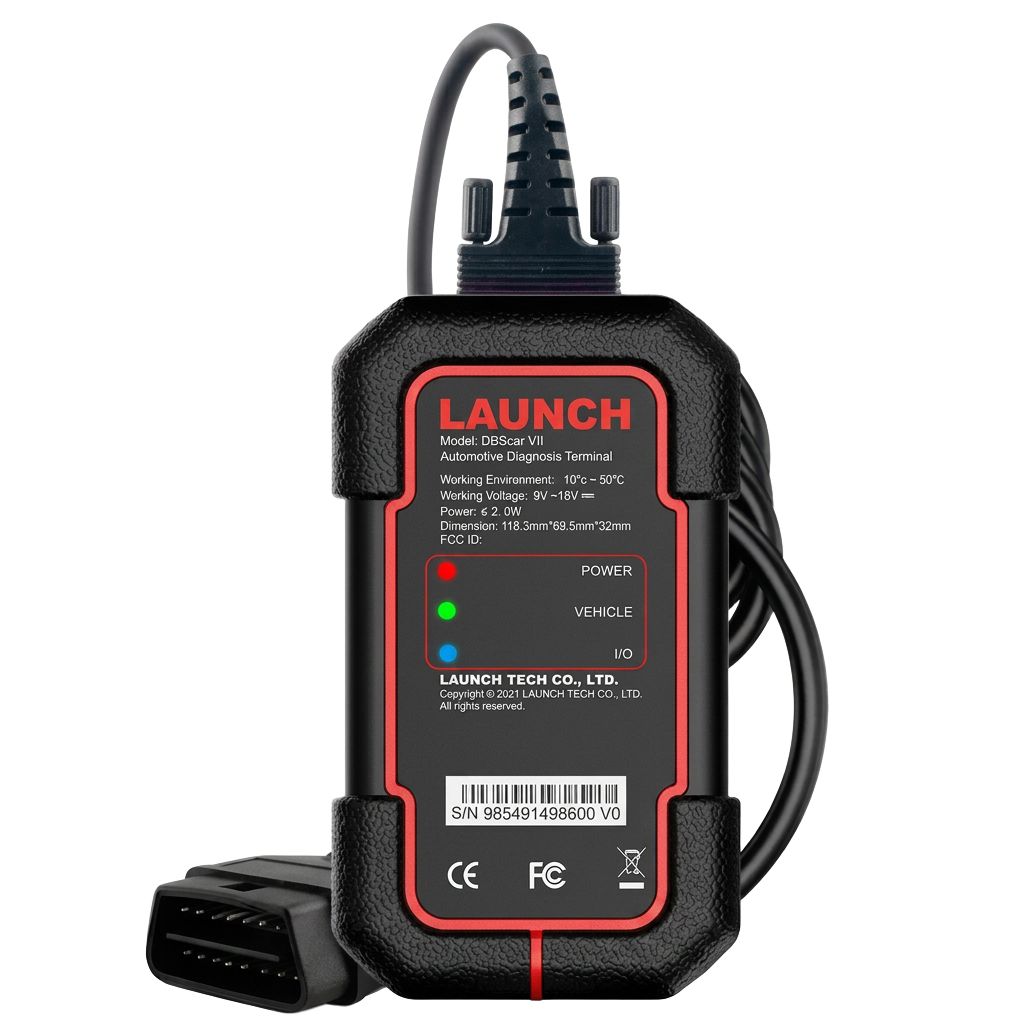
This is where a proper diagnostic scanner earns its money. On the Launch DBScar VII, available at MS Auto Tools for Rs 75,000, you can watch engine RPM live while cranking. A healthy crank sensor shows a steady cranking speed of 200 to 300 rpm. If the scanner shows 0 rpm while the engine is clearly turning over, the crank sensor signal is missing — the ECU is not seeing the engine rotate at all.
Step-by-Step Diagnosis: Crank Sensor No-Start
Start with the basics. Confirm the battery is healthy — below 10.5 volts while cranking, the starter turns slowly and the sensor signal is too weak to read. Confirm there is fuel and that the fuel pump primes when the key is turned on. Then plug in the scanner and read the codes and freeze-frame data.
Next, watch live data while an assistant cranks the engine. Look at engine RPM and crank sensor signal status. Zero rpm while cranking means the crank signal is absent. RPM present but no start points elsewhere — check spark and fuel pressure next.
If the scanner shows no crank signal, check the sensor itself. First inspect the wiring and connector — look for oil contamination, green corrosion on the pins, chafed wires near hot exhaust parts, and a connector that is not fully seated. Many no-starts in Pakistan are fixed by cleaning a connector, not replacing a sensor. Then test the sensor with a multimeter: a magnetic crank sensor should measure roughly 500 to 1,000 ohms across its two terminals, and an open circuit or dead short means it is finished. Also inspect the reluctor wheel — a cracked tooth or the wrong air gap (usually 0.5 to 1.5 mm) produces a weak signal.
If your workshop sees a lot of no-start jobs, a scanner that reads live cranking RPM and sensor data is not a luxury — it is the tool that stops you replacing fuel pumps and coils that were never faulty. The Launch DBScar VII (Rs 75,000 at MS Auto Tools) covers full-system diagnostics and live data on Corolla, Civic, Swift, Sportage, Tucson, and most other cars in Pakistan, with CAN FD and DoIP support for newer models. WhatsApp us on +92 300 0678111 for current stock and delivery anywhere in Pakistan.
Cam Sensor Faults: Harder to Spot, Just as Costly
Cam sensor failures are sneakier than crank sensor failures because the car often still starts. The usual complaints are a long crank before the engine catches, rough idling, loss of power, poor fuel economy, and the engine going into limp mode. On Toyotas, a faulty cam sensor can also trigger VVT-i codes, because the ECU uses the cam sensor to control variable valve timing.
Diagnosis follows the same pattern. Read the codes, watch live cam sensor data, and compare the crank and cam signals. P0016 correlation codes deserve special attention: if the timing chain has stretched or the timing belt has jumped a tooth, the sensors themselves are fine and replacing them will not fix anything. Check the timing marks physically before ordering parts.
Oil leaks are a common cause of cam sensor failure in Pakistan: a leaking valve cover gasket drips oil onto the connector and causes intermittent contact. Fix the leak when you replace the sensor, or the new sensor will fail the same way within months.
Replacing the Sensor: Getting It Right the First Time
Always fit the correct sensor for the exact engine — a 1.8-litre Corolla and a 1.6-litre Corolla use different crank sensors, and the connectors are not interchangeable. Clean the mounting surface, check the air gap if the sensor is adjustable, and torque the mounting bolt to the manufacturer's figure, usually around 8 to 12 Nm — overtightening cracks the sensor body.
After fitting, clear the codes and crank the engine while watching live RPM on the scanner. The engine should start within a couple of seconds and the rpm reading should be steady. Take the car for a test drive that includes a hot restart — drive for fifteen minutes, switch off, wait five minutes, and restart. This is the test that catches the heat-related failures, and it is the test most workshops skip. If the car restarts cleanly when hot, the job is done.
Beware of counterfeit sensors. The grey market in Pakistan is full of cheap crank and cam sensors in copied packaging, sold at half the price of a genuine part. A counterfeit sensor often uses a weak magnet or a low-grade Hall element, so it produces a weak signal that the ECU reads intermittently — the car starts in your workshop and stalls at the next traffic light, and the customer blames your work, not the part. MS Auto Tools supplies only genuine diagnostic tools with warranty, and we recommend the same standard for parts: fit a genuine or known-quality sensor, verify it with live data, and the job stays fixed.
Frequently Asked Questions
Can a bad crank sensor cause a no-start with no check engine light?
Yes. If the sensor fails completely, the ECU may not set a code because it never sees the engine turning. The absence of a code does not rule out the sensor — watch live cranking RPM on a scanner instead.
Why does my car start when cold but not when hot?
Heat failure of the crank sensor is the classic pattern. The sensor's internal coil or electronics break down as temperature rises and the signal weakens. Once it cools, the sensor works again. Replace the sensor and verify with a hot restart test.
How do I know if it is the crank sensor or the fuel pump?
Check live RPM while cranking. If the scanner shows 0 rpm, the crank sensor signal is missing. If it shows 200 to 300 rpm, the sensor is working and you should check fuel pressure and spark next.
Can a cam sensor fault stop the engine from starting?
Usually the engine still starts but runs rough, cranks long, or goes into limp mode. On some cars, especially with push-button start, a cam sensor fault can prevent starting entirely. Always fix cam sensor codes — they also affect VVT and fuel economy.
Which scanner shows live cranking RPM and sensor data?
Any professional scanner with live data. The Launch DBScar VII (Rs 75,000) shows engine RPM and crank and cam sensor status while cranking, and covers full-system diagnostics on most cars in Pakistan. The Thinkdiag 2 Diagzone Pro (Rs 65,000) offers the same live data in a compact Bluetooth package.
Conclusion
Crank and cam sensor faults are among the most common causes of no-start complaints in Pakistan, and they are also among the easiest to misdiagnose. Learn the pattern — strong crank, no fire, often worse when hot — learn the codes, and always verify with live cranking RPM on a scanner before ordering parts.
If your workshop needs a scanner that reads live cranking data properly, talk to MS Auto Tools on WhatsApp +92 300 0678111. The Launch DBScar VII is Rs 75,000 with CAN FD and DoIP support, genuine with warranty, and delivered anywhere in Pakistan. Order today and stop guessing at no-start faults.