Common Rail Diesel Pressure Faults: Pump, Rail & Injector Checks (2026 Pakistan Guide)
2026-11-28 18:04:52 · by MS Auto Tools
Common Rail Diesel Pressure Faults: Pump, Rail & Injector Checks (2026 Pakistan Guide)
Common rail diesel pressure faults are the number one reason a Toyota Fortuner, Hilux Revo, Kia Sportage diesel or Hyundai Tucson CRDi comes into a Pakistani workshop with a hard start, a check engine light, or a sudden loss of power. In a common rail system, one high-pressure pump feeds a single fuel rail that supplies all four injectors at pressures between 300 and 2,500 bar. When rail pressure drops even 100 bar below the target the ECU commands, the engine runs rough, smokes, or refuses to start at all. This guide explains how to diagnose common rail pressure faults step by step, which live data values to check, and which tools Pakistani workshops use in 2026 to find the fault fast instead of replacing parts by guesswork.
What Is Common Rail Pressure and Why Does It Matter?
A common rail diesel engine does not use a separate pump per cylinder the way older mechanical diesel engines did. One high-pressure fuel pump, driven by the engine, pressurises diesel fuel and stores it in a shared metal rail. The ECU opens each injector electronically for a few milliseconds, spraying fuel at extremely high pressure into the combustion chamber. The finer the spray, the cleaner and more complete the burn, which is why a healthy common rail engine starts easily, pulls strongly and produces very little smoke.
The ECU constantly compares two numbers: desired rail pressure and actual rail pressure. Desired pressure changes with load, from around 250 to 350 bar at idle up to 1,800 to 2,500 bar at full load on modern engines such as the Toyota 1GD-FTV 2.8-litre in the Fortuner and Hilux Revo. Actual pressure is read by the rail pressure sensor. If the difference between the two exceeds roughly 50 to 100 bar for more than a few seconds, the ECU stores a fault code such as P0087 (fuel rail pressure too low), P0088 (fuel rail pressure too high), P0191 (fuel rail pressure sensor range), or P1011, and in most cases it limits engine power or cuts the engine to protect the injectors.
For a workshop, this matters because a pressure fault can be caused by at least six different components: the low-pressure lift pump, the fuel filter, the high-pressure pump, the pressure regulator valve, the rail pressure sensor, or one or more leaking injectors. Replacing parts one by one is the most expensive way to fix it. A scanner with live data turns a Rs 150,000 guessing game into a 30-minute diagnosis.
Warning Signs of a Common Rail Pressure Fault
Most common rail pressure problems announce themselves before the car stops completely. A customer who reports any of these symptoms should have rail pressure checked the same day, because driving on with a pressure fault can destroy injectors that cost Rs 45,000 to Rs 95,000 each in Pakistan.
Hard starting, especially when the engine is hot, is the classic symptom. The engine cranks normally but takes five to ten seconds to catch, or needs two or three attempts. This happens because a worn high-pressure pump or a leaking injector cannot build the 300 bar the ECU needs before it will allow injection. Cold starts may still be fine because the ECU commands a longer cranking fuel pulse when cold.
Sudden loss of power under load is the second sign. The car drives normally around town but loses power on the motorway or on a climb, often with the check engine light coming on. The ECU has detected rail pressure falling below target at high demand and has entered limp mode, capping engine speed at around 2,000 to 2,500 rpm.
Excessive black or white smoke points to pressure problems too. Black smoke usually means pressure is too low at the injector, so fuel droplets are too large to burn completely. White smoke on a cold start can mean one injector is leaking fuel into a cylinder overnight. Either way, a pressure test is the next step, not a new air filter.
A noisy high-pressure pump is another warning. A healthy pump makes a soft ticking sound. A loud metallic knocking or whining from the pump area, especially when combined with metal particles in the fuel filter, means the pump is breaking up internally. Stop the engine immediately in that case, because metal debris travels through the rail and destroys all four injectors within minutes.
Rough idle, hunting rpm at idle, and stalling at traffic lights round out the list. At idle the ECU has the least margin for error, so a small pressure leak that is invisible at speed shows up clearly as an unstable idle.
Step 1: Read the Fault Codes and Freeze Frame Data
Always start with a full system scan, not just an engine code read. Connect the scanner, read all stored and pending codes, and save the freeze frame data, which records engine speed, coolant temperature, fuel temperature, desired rail pressure and actual rail pressure at the exact moment the fault was stored.
P0087, fuel rail pressure too low, is the most common code on Pakistani diesel SUVs. It means actual pressure stayed below desired pressure for a set time. P0088 means pressure went above the limit, which usually points to a stuck pressure regulator or a faulty rail pressure sensor. P0190, P0191, P0192 and P0193 are sensor circuit codes and should be checked before condemning the pump. P1011 on Toyota 1GD and 2GD engines is a fuel pressure system malfunction that often appears together with P0087.
Freeze frame data tells you the conditions. If the fault set at idle with desired pressure 320 bar and actual pressure 180 bar, the problem is a low-pressure supply fault or a leaking injector. If it set at 3,000 rpm under load with desired pressure 1,800 bar and actual 1,200 bar, the high-pressure pump is probably worn or the regulator is bleeding pressure back to the tank.
Also check the fuel pressure related codes in the immobiliser and transmission modules. A rail pressure fault can trigger limp mode codes in the transmission, and those clear themselves once the pressure fault is fixed. Do not chase transmission codes until the engine is healthy.
Step 2: Check Live Rail Pressure Data
Live data is where a common rail diagnosis is won or lost. With the engine running, open the live data list and watch four values: desired rail pressure, actual rail pressure, fuel temperature, and injector correction values.
At idle on a healthy 2.8-litre Fortuner or Hilux Revo, desired and actual rail pressure should both sit between 280 and 350 bar and track each other within 20 bar. At 2,000 rpm with no load, pressure should rise to 600 to 800 bar. A snap throttle test should push pressure above 1,200 bar within one second. If actual pressure lags behind desired pressure by more than 100 bar, or takes more than two seconds to catch up, the high-pressure side is not delivering.
The return flow test is the quickest way to find a leaking injector. With the engine at idle, disconnect the return line from each injector one at a time into a measuring bottle for 60 seconds. A healthy injector returns 10 to 30 ml per minute. An injector returning 80 ml or more is leaking internally and dragging rail pressure down for the whole system. On a four-cylinder engine, one bad injector can cause a P0087 that looks exactly like a pump failure, and replacing the pump first wastes Rs 120,000 or more.
Injector correction values, sometimes called injector quantity adjustment or IQA values, are equally useful. The ECU trims each injector by plus or minus 3 mg per stroke to balance the engine. A correction value beyond plus or minus 4 mg per stroke on one cylinder at idle points to a worn or blocked injector on that cylinder. If all four corrections are high in the same direction, the fault is upstream, in the pump or the regulator, not in the injectors.
Step 3: Test the Low-Pressure Fuel Supply
Before blaming the expensive high-pressure pump, prove the cheap low-pressure side is healthy. The high-pressure pump cannot build 2,000 bar if it is only receiving 1 bar of fuel instead of the 3 to 5 bar it expects.
Check the fuel filter first. In Pakistan, diesel quality varies widely, and a filter that should last 30,000 km can block in 10,000 km on adulterated fuel. A blocked filter is the single most common cause of a P0087 on a Fortuner or Hilux that has just been serviced elsewhere with a cheap filter. Replace the filter with a genuine one, clear the codes, and re-test rail pressure before doing anything else.
Test the in-tank lift pump next. With the ignition on and the engine off, you should hear the lift pump run for two to three seconds and build 3 to 5 bar at the filter outlet. A weak lift pump causes hard hot starts and pressure drops under load, and it costs a fraction of a high-pressure pump. Check the lift pump relay and fuse as well, because a corroded relay contact causes intermittent pressure faults that never appear on a static test.
Inspect the fuel lines and the fuel tank pickup for air leaks. Air in the fuel causes erratic rail pressure that jumps up and down by hundreds of bar on live data. Look for wet spots around fuel line joints, a cracked filter housing, or a loose fuel cap seal. A simple clear hose fitted temporarily between the filter and the high-pressure pump makes air bubbles visible in seconds.
Step 4: Test the High-Pressure Pump and Regulator
If the low-pressure supply is good and rail pressure still will not reach target, the high-pressure pump or the pressure regulator valve is the next suspect. Both are tested with the scanner, not by removal.
The fuel pressure regulator, also called the suction control valve or metering unit, controls how much fuel the high-pressure pump delivers. With the engine idling, command the regulator through the scanner's actuation test if your tool supports it. Rail pressure should rise and fall smoothly as you command the regulator open and closed. A regulator that does not respond, or a pressure reading that jumps in steps instead of moving smoothly, means the regulator is stuck or worn. On many Toyota and Hyundai diesel engines the regulator is a separate, replaceable part costing Rs 25,000 to Rs 45,000, far cheaper than a complete pump.
The high-pressure pump itself is tested by a maximum pressure test. With the engine at 2,000 rpm, watch actual rail pressure while the ECU commands maximum pressure. A healthy pump reaches 1,600 bar or more. A pump that cannot pass 1,000 bar under this test is worn out, usually because of metal wear from contaminated fuel. Check the fuel filter housing for metal particles before fitting a new pump. If you find glitter in the filter, the whole fuel system, rail, lines and injectors, must be cleaned or the new pump will fail within weeks.
One important warning for Pakistani workshops: never open a high-pressure fuel line with the engine running, and never put a hand near an injector leak. Diesel at 2,000 bar can inject through skin and cause a serious injury that looks minor at first. Always depressurise the rail through the scanner before opening any high-pressure connection.
Step 5: Check the Rail Pressure Sensor and Wiring
A faulty rail pressure sensor can produce a P0087 even when the mechanical fuel system is perfect. The sensor is a three-wire device with a 5-volt reference, a ground, and a signal wire that returns 0.5 volts at zero pressure and around 4.5 volts at maximum pressure.
With the ignition on and the engine off, the scanner should show a rail pressure reading of 0 to 10 bar. If it shows 200 bar or more with the engine off, the sensor is faulty or its wiring is shorted. With the engine running, compare the scanner reading with a mechanical gauge fitted to the rail test port if one exists. A difference of more than 50 bar means the sensor is lying to the ECU.
Check the sensor connector for diesel contamination and green corrosion, which is common on older Sportage and Tucson CRDi engines where the sensor sits low on the rail. Also check the wiring harness where it passes near the exhaust manifold, because heat damage causes intermittent sensor faults that only appear on long drives. A sensor replacement costs Rs 15,000 to Rs 35,000 depending on the model, and it is a 20-minute job on most engines, so it should be tested before any pump work.
What a Good Scanner Must Do for Common Rail Work
Common rail diagnosis is impossible with a code reader that only shows fault codes. A workshop in Pakistan in 2026 needs a scanner that reads live rail pressure, desired versus actual pressure, injector correction values, fuel temperature and fuel pump duty cycle, and that can run actuation tests on the pressure regulator and perform injector coding after replacement.
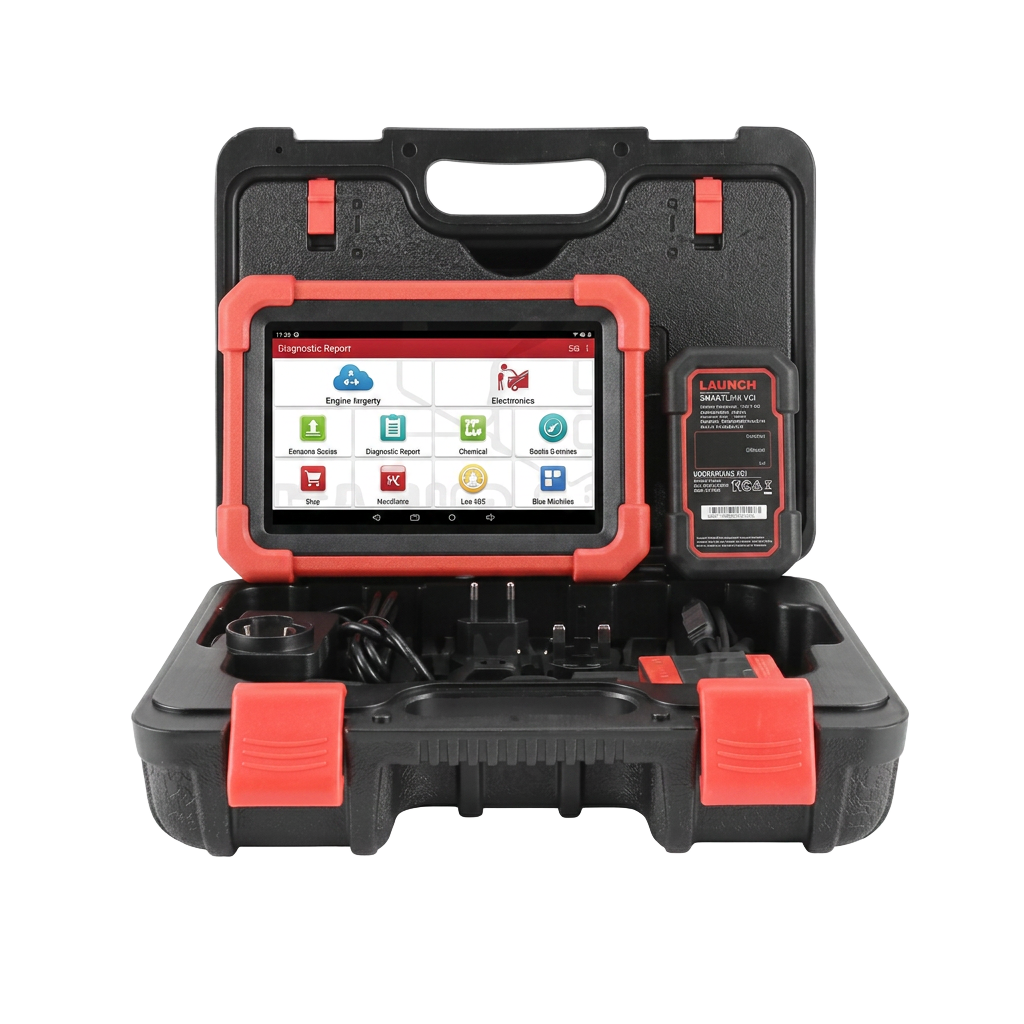
The Launch X-431 Creader Professional 919 MAX is a strong fit for this work. It reads full-system live data on Toyota, Kia, Hyundai, Isuzu and Suzuki diesel models common in Pakistan, supports bi-directional actuation tests for the fuel pressure regulator, and covers service functions including injector coding, DPF regeneration and fuel system priming. At Rs 165,000 from MS Auto Tools, with genuine warranty and free delivery across Pakistan, it gives a mid-size workshop the same rail pressure diagnostic capability that main dealers use, at a fraction of dealer tool prices.
For smaller workshops or mobile mechanics, the Launch DBScar VII at Rs 75,000 covers the same live data and fault code functions in a Bluetooth adapter that pairs with a phone or tablet, making it a practical second tool for roadside diagnosis. Both tools are genuine stock at MS Auto Tools, and both are covered by local warranty and support, which matters when a tool needs a software update for a new model year.
Avoid Counterfeit Scanners for Diesel Work
Counterfeit and cloned diagnostic tools are a real problem in the Pakistani market, and common rail work is where they cause the most damage. A cloned scanner often shows rail pressure values that are frozen, delayed by several seconds, or simply wrong, which leads a mechanic to replace a healthy pump or miss a leaking injector entirely. Worse, cloned tools have been known to corrupt ECU software during injector coding, a repair that can cost Rs 100,000 or more at a dealer.
Buy genuine tools from an authorised seller, check the serial number with the manufacturer, and insist on a written warranty. MS Auto Tools sells genuine Launch, Autel, Xhorse, Thinkcar, OBDSTAR and XTOOL tools with warranty and after-sales support in Pakistan. A genuine tool pays for itself the first time it saves you from one wrong pump replacement.
Common Rail Pressure Fault Costs in Pakistan (2026)
Knowing the approximate costs helps a workshop quote honestly and helps a customer decide whether to repair or replace. A genuine fuel filter costs Rs 3,000 to Rs 8,000 depending on the model. A lift pump costs Rs 12,000 to Rs 30,000. A pressure regulator valve costs Rs 25,000 to Rs 45,000. A rail pressure sensor costs Rs 15,000 to Rs 35,000. A reconditioned injector costs Rs 45,000 to Rs 70,000, and a new injector costs Rs 65,000 to Rs 95,000. A high-pressure pump costs Rs 120,000 to Rs 280,000 depending on the model, with Toyota 1GD pumps at the higher end. A full diagnostic with live data and a return flow test should cost a customer Rs 2,000 to Rs 5,000, which is cheap insurance against a wrong guess.
Frequently Asked Questions
What does the P0087 code mean on a Toyota Fortuner?
P0087 means fuel rail pressure too low. The ECU commanded a target rail pressure and the actual pressure stayed below it for a set time. Common causes on the Fortuner 2.8-litre are a blocked fuel filter, a weak lift pump, a leaking injector, a worn pressure regulator, or a failing high-pressure pump. Always check the fuel filter and live rail pressure data before replacing any major part.
Can I drive with a common rail pressure fault?
You can drive a short distance at low speed, but it is not safe to continue. The ECU will limit power in limp mode, and a leaking injector can wash oil off a cylinder wall or hydrolock the engine. A failing high-pressure pump can shed metal particles that destroy all four injectors. Get the fault diagnosed the same day.
Why is my diesel hard to start when hot but fine when cold?
Hot hard starting is a classic common rail pressure symptom. When fuel is hot it is thinner, so a worn pump or a leaking injector loses more pressure. The ECU needs around 300 bar before it will inject fuel, and a worn system cannot reach that pressure when hot. Check the injector return flow and the high-pressure pump output first.
How do I know if the fault is the pump or an injector?
Run a return flow test. Disconnect each injector return line into a bottle for 60 seconds at idle. A healthy injector returns 10 to 30 ml per minute. An injector returning 80 ml or more is leaking and causing the pressure drop. If all four injectors return normally and rail pressure still will not reach target, the high-pressure pump or regulator is at fault.
Do I need to code new injectors after replacement?
Yes, on almost all common rail engines sold in Pakistan, including Toyota, Kia, Hyundai and Isuzu. Each injector has a calibration code printed on its body that must be entered into the ECU with a diagnostic scanner. Without coding, the engine will run rough and may store injector correction faults. The Launch X-431 Creader 919 MAX supports injector coding on these models.
Can a cheap scanner diagnose common rail pressure faults?
Only if it shows live rail pressure data and injector correction values. A basic code reader that only displays fault codes cannot tell you whether the pump, regulator, sensor or an injector is at fault. Invest in a scanner with full live data and bi-directional tests, such as the Launch X-431 Creader 919 MAX at Rs 165,000 or the Launch DBScar VII at Rs 75,000, both available genuine from MS Auto Tools.
Get Genuine Diagnostic Tools for Your Workshop
Common rail pressure faults reward workshops that diagnose before they replace. A scanner with live rail pressure data, a return flow test and a methodical check of the fuel supply will find the real fault in under an hour and save your customer from an unnecessary pump or injector replacement. If your workshop works on Fortuner, Hilux Revo, Sportage diesel, Tucson CRDi or any other common rail diesel, make sure your diagnostic tool can read rail pressure properly.
MS Auto Tools stocks genuine Launch, Autel, Xhorse, Thinkcar, OBDSTAR and XTOOL diagnostic tools with warranty and free delivery across Pakistan. To order the Launch X-431 Creader Professional 919 MAX at Rs 165,000, or the Launch DBScar VII at Rs 75,000 for mobile diagnosis, contact us on WhatsApp at +92 300 0678111. Send your car model and the fault code your scanner shows, and we will confirm the right tool for your workshop before you buy.