Check Engine Light Diagnosis Workflow: From Code to Fix (2026 Pakistan Guide)
2026-11-04 13:57:04 · by MS Auto Tools
Check Engine Light Diagnosis Workflow: From Code to Fix (2026 Pakistan Guide)
The check engine light is the single most common reason a customer walks into a workshop in Pakistan. It could be a loose fuel cap worth zero rupees, or a failing catalytic converter worth Rs 80,000 — and the customer cannot tell the difference. A proper check engine light diagnosis workflow is what separates a professional workshop from one that just clears codes and hopes. In this 2026 guide, we walk through the exact step-by-step workflow professional workshops use: read the code, understand it, test the suspect system, repair it, and prove the fix — so the light stays off and the customer comes back.
1. Step One: Never Clear the Code First
The biggest mistake beginners make is clearing the fault code before recording it. The moment you erase it, you lose freeze-frame data — the engine speed, coolant temperature, fuel trim and load at the exact moment the fault occurred. That data is often the clue that solves the case.
A professional workflow starts with documentation: record every code (active, pending and history), the freeze frame, and the customer's own description. When did the light come on — cold start, highway driving, after refuelling? On a Toyota Corolla, a P0171 lean code that appears only on cold mornings points somewhere very different from one that appears at highway speed. Write it down before you touch anything.
2. Step Two: Read All Systems, Not Just the Engine
A basic code reader only talks to the engine ECU. But a modern car — a Honda Civic, a Kia Sportage, a Hyundai Tucson — has 15 to 30 control modules, and a fault in one system often shows up as a symptom in another. A weak battery, for example, can throw half a dozen unrelated codes across ABS, airbag and transmission modules.
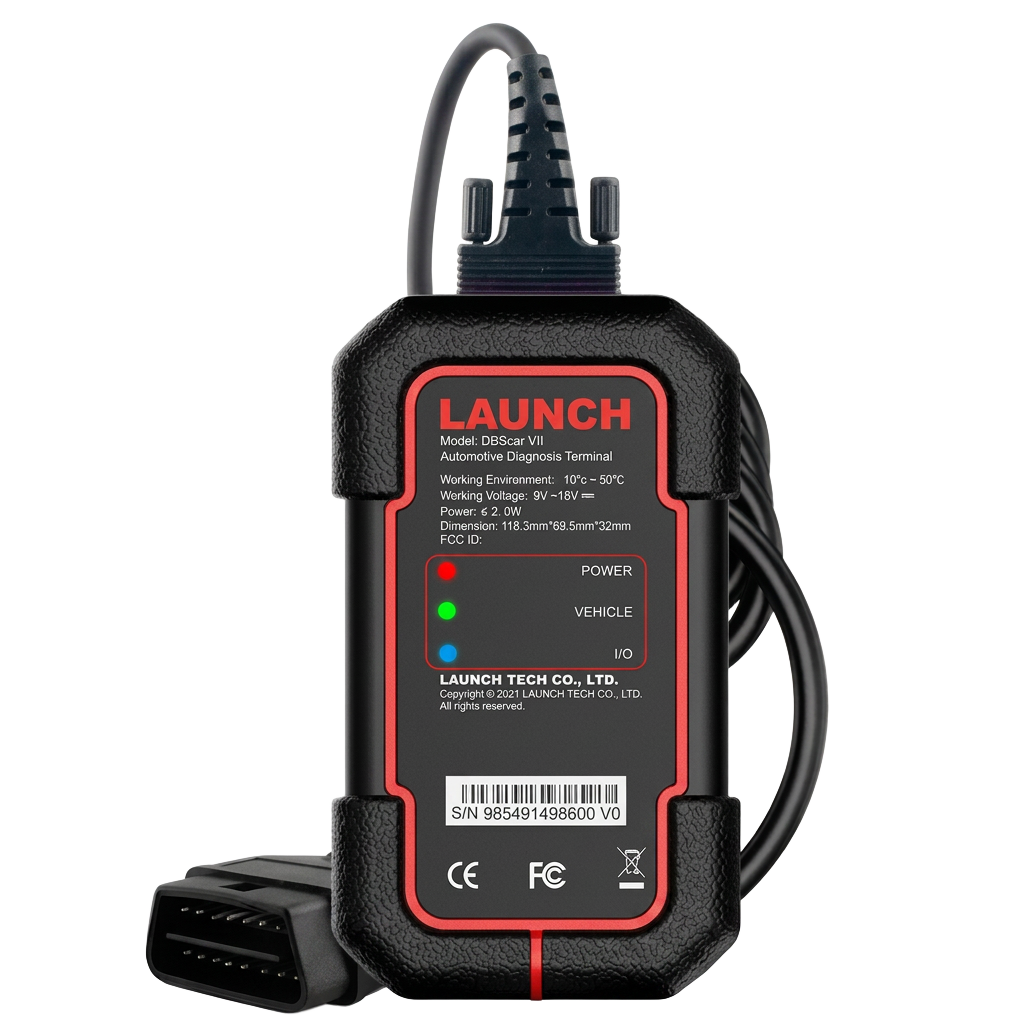
That is why workshops in 2026 use an all-system scanner rather than a cheap engine-only reader. A tool like the Launch DBScar VII (Rs 75,000 at MS Auto Tools) reads every module over Bluetooth, covers CAN FD and DoIP protocols for newer cars, and shows live data — so you see the whole car, not just one warning light. If your scanner only reads the engine, you are diagnosing with one eye closed.
3. Step Three: Understand What the Code Actually Means
A fault code is a symptom report, not a parts order. P0301 means "cylinder 1 misfire detected" — it does not mean "replace the cylinder 1 coil." The misfire could be a coil, a spark plug, an injector, low compression, or even a vacuum leak leaning out one cylinder.
Good diagnosticians translate codes into systems. Roughly, the most common families in Pakistani workshops are:
- P0171 / P0174 (system too lean): vacuum leak, dirty MAF sensor, weak fuel pump, or — very commonly on CNG-converted cars — a fuelling calibration issue.
- P0300–P0304 (misfires): plugs, coils, injectors, or compression; check the misfire counter in live data, not just the code.
- P0420 (catalyst efficiency below threshold): often a tired catalytic converter on high-mileage Corollas and Civics, but first rule out exhaust leaks and a lazy downstream oxygen sensor.
- P0401 (EGR flow insufficient): carbon-clogged EGR passages, common on diesel Fortuners and Hiluxes doing short city trips.
- EVAP codes (P0440–P0456): usually a loose or cracked fuel cap, a leaking EVAP hose, or a stuck purge valve — cheap fixes that customers love to hear about.
Knowing the family tells you which live-data parameters to watch next, and that is where the real diagnosis happens.
4. Step Four: Confirm with Live Data Before Replacing Parts
This is the step that saves workshops money and reputation. Before ordering a single part, confirm the suspect with live data or a simple physical test. A P0171 lean code should show positive long-term fuel trims — typically +15% or more at idle, dropping toward normal at higher RPM if the cause is a vacuum leak. An oxygen sensor that switches slowly or sticks at one voltage is a suspect; one switching crisply 8–10 times in 10 seconds is probably innocent.
Bi-directional control makes this faster: commanding the EVAP purge valve open, cycling an injector, or running an idle relearn from the scanner proves whether an actuator responds, without removing anything. On a Suzuki Swift with a rough idle, for instance, watching short-term fuel trim while spraying a small amount of cleaner near a suspected vacuum hose — and seeing the trim drop — confirms the leak in seconds. Parts replaced on evidence stay replaced; parts replaced on guesswork come back as complaints.
Mid-article note for workshop owners: if your current scanner cannot show live data graphs or run active tests, it is costing you comebacks. Genuine tools with full live data — like the Launch DBScar VII (Rs 75,000) or the Thinkdiag 2 (Rs 65,000) — pay for themselves in avoided wrong parts. Both are available from MS Auto Tools with warranty and local support. For genuine tools and advice on the right scanner for your workshop, WhatsApp MS Auto Tools on +92 300 0678111.
5. Step Five: Repair, Then Verify — Don't Just Clear and Pray
After the repair, the job is only half done. Clear the codes, then drive the car through the conditions that originally set the fault: cold start, idle, city traffic and a short highway run. Watch the readiness monitors — on most cars, the catalyst, oxygen sensor and EVAP monitors need a proper drive cycle before they report "complete." If a monitor stays incomplete after a reasonable drive, the fault may still be lurking.
The verification drive is also your proof to the customer. Showing them "before: P0420 active, after: no codes, all monitors complete" turns a Rs 5,000 diagnostic charge from a grudge into good value. Workshops that skip verification are the ones that see the same car back in a week with the same light on — and a customer who no longer trusts them.
6. The Most Common Check Engine Causes in Pakistan
Local conditions shape the fault mix. Dust clogs MAF sensors and air filters faster than service manuals assume, so a Corolla that has done 60,000 km on dusty roads often just needs a proper intake clean. Fuel quality varies, so injector deposits and oxygen-sensor contamination are more common than in showroom-fresh markets. CNG conversions add a whole layer of fuelling faults that only appear on petrol-mode diagnostics. And on high-mileage cars — the 2012–2018 Corollas and Civics that fill every workshop — catalytic converters and oxygen sensors simply wear out.
A realistic diagnostic fee in Pakistan in 2026 is Rs 1,000–2,500 for a full scan with a written report, and most customers accept it happily when the report names the faulty part with evidence instead of a guess. Never diagnose for free and then wonder why customers take your diagnosis to a cheaper parts shop — the scan, the live data and the interpretation are skilled work.
7. Beware of Counterfeit Scanners — They Miss Faults
A warning that matters more every year: counterfeit and cloned scanners flood online marketplaces at suspiciously low prices. A cloned tool may read basic engine codes but miss manufacturer-specific codes, show wrong live data, or brick itself on a software update — and a missed fault on a customer's car is your reputation on the line. MS Auto Tools sells genuine Launch, Autel, Xhorse, Thinkcar, OBDSTAR and XTOOL tools with warranty, so the tool you diagnose with is one you can trust. If a deal looks too cheap to be real, it almost certainly is.
Frequently Asked Questions
Can I keep driving with the check engine light on?
If the light is steady and the car drives normally, you can usually drive carefully to a workshop — but get it checked within a day or two. If the light is flashing, stop as soon as it is safe: a flashing light means an active misfire that can overheat and destroy the catalytic converter within minutes.
Will disconnecting the battery clear the check engine light?
Temporarily, yes — but it also erases freeze-frame data and learned values, and the light will return if the fault is still there. It also resets readiness monitors, which can fail an inspection. Proper diagnosis beats a battery reset every time.
How much does check engine light diagnosis cost in Pakistan in 2026?
Most workshops charge Rs 1,000–2,500 for a full-system scan with a written report. The repair itself varies enormously — a fuel cap costs under Rs 1,000, while a catalytic converter can exceed Rs 80,000 — which is exactly why accurate diagnosis matters.
Does a cheap Rs 5,000 code reader do the same job as a professional scanner?
For reading a basic engine code, roughly. For all-system coverage, live-data graphs, bi-directional tests and newer CAN FD / DoIP cars, no. Professional tools like the Launch DBScar VII (Rs 75,000) cover the systems a cheap reader never sees.
Why did my check engine light come back after the workshop cleared it?
Because clearing a code does not fix a fault. If the underlying problem — a leaking hose, a lazy sensor, a worn converter — is still there, the ECU will detect it again, usually within one or two drive cycles. Ask the workshop for the before-and-after scan report.
Which scanner should a small workshop buy for check engine diagnosis?
For most small workshops, a Bluetooth all-system scanner is the best value: the Launch DBScar VII at Rs 75,000 or the Thinkdiag 2 at Rs 65,000 both cover all systems, CAN FD and DoIP, and handle the Corolla, Civic, Swift, Sportage and Tucson models that dominate Pakistani roads.
Conclusion: Diagnose in Order, Every Time
Record the code, read all systems, understand the system behind the code, confirm with live data, repair, and verify with a drive. That six-step workflow — followed in order, every time — is what keeps the check engine light off, keeps customers trusting you, and keeps your workshop's comeback rate low. Skip a step, and you are guessing with someone else's car.
For genuine diagnostic tools, pricing and advice on the right scanner for your workshop, contact MS Auto Tools on WhatsApp at +92 300 0678111. Genuine Launch, Autel, Xhorse, Thinkcar, OBDSTAR and XTOOL tools with warranty — including the Launch DBScar VII (Rs 75,000, https://msautotools.com/product.php?slug=launch-dbscar-vii-dbscar7) — are available for workshops across Pakistan.