
Battery Drain Diagnosis: Parasitic Draw Testing Step by Step (2026 Pakistan Guide)
2026-11-07 13:59:40 · by MS Auto Tools
# Battery Drain Diagnosis: Parasitic Draw Testing Step by Step (2026 Pakistan Guide)
A car that starts fine all day but is dead every morning has a parasitic drain — something in the car keeps drawing current after you switch it off. Parasitic draw testing is the step-by-step method workshops use to find that hidden load, measure it, and trace it to the exact circuit. This guide walks you through the complete test, the normal milliamp values for Pakistani cars, the tools you need, and what to charge for the job in 2026.
## What Is Parasitic Draw?
Parasitic draw is the small electrical current a car continues to use when the ignition is off. Every modern car has some: the clock, the alarm, the keyless-entry receiver and the ECU memory all sip power while parked. The problem starts when that draw is too big — a stuck relay, a glovebox light that never switches off, a faulty aftermarket tracker, or a module that refuses to go to sleep can pull 500 mA or more and flatten a healthy battery overnight.
A typical 45–70 Ah car battery can survive a 30–50 mA draw for weeks. At 300 mA, the same battery is flat in 5–7 days. At 1 amp, it may not start the next morning. That is why "new battery, still dead" is one of the most common complaints at workshops in Lahore, Karachi and Bahawalpur — and why a proper parasitic draw test, not another battery sale, is the correct first step.
## Symptoms That Point to a Parasitic Drain
Before you start testing, confirm the symptoms actually fit a drain rather than a failing battery or a bad alternator. A parasitic drain usually shows up as a battery that goes flat overnight or after two or three days parked, even though it charges normally while driving. The car jump-starts easily and runs fine once started. The battery itself tests healthy on a load tester, and the alternator charges at 13.8–14.4 volts with the engine running.
Other clues are worth noting. A warm relay or module hours after switch-off, a boot or glovebox light that stays on, an aftermarket tracker or dashcam wired directly to the battery, or a recently fitted accessory are all classic culprits. On a Toyota Corolla 2021 or Honda Civic 2022, a common cause is an infotainment or telematics module that never enters sleep mode. On a Suzuki Swift, it is often a door switch that fails to signal "closed", keeping the interior light circuit live. On older cars like a Honda City 2016, look first at the aftermarket alarm or CNG kit wiring.
If the battery is more than three years old, test it first. A weak battery can mimic a drain, and no amount of draw testing fixes a sulphated cell. In 2026 a new 65 Ah battery for a Corolla costs roughly Rs 22,000–28,000 in Pakistan — a parasitic draw test costs the customer far less than a battery they do not need.
## Tools You Need for Parasitic Draw Testing
You can do a basic test with a digital multimeter, but a professional job needs a little more. A good multimeter with a 10-amp DC range and a milliamp range is essential. A low-current clamp meter is even better: it measures draw without breaking the circuit, which keeps modules awake-state behaviour intact. Fuse-pulling pliers, a test light, and a wiring diagram for the car in question round out the kit.
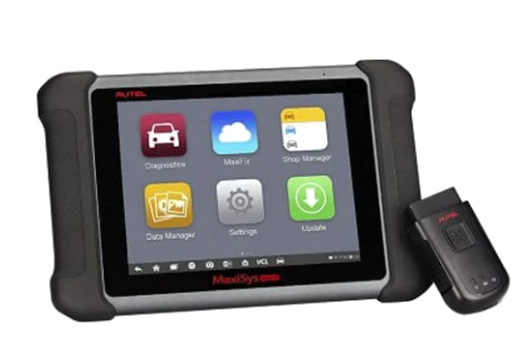
For workshops that want to do this properly, a diagnostic scanner with live data and module sleep monitoring changes the game. The AUTEL MaxiSys MS906BT 64GB Advanced Wireless Diagnostic Scanner (Rs 260,000 at MS Auto Tools) reads battery management data, checks module status, and can wake or command individual modules during diagnosis — useful when the drain comes from a body control module or a CAN-bus network that will not sleep. A more affordable option is the AUTEL MaxiCheck MX900 (Rs 155,000), which covers battery registration, system scans and live data on most Pakistani cars including Corolla, Civic, Swift, Sportage and Tucson. Both are genuine Autel tools with warranty when bought from MS Auto Tools — a warning that matters, because counterfeit scanners sold cheaply online often brick ECUs or give wrong readings, and a wrong reading on a drain test sends you chasing the wrong circuit for hours.
## Step 1: Prepare the Car and Let It Sleep
Park the car, switch everything off, remove the key from the ignition (or keep the smart key at least 5 metres away), and close all doors, the bonnet and the boot. Latch the bonnet and boot catches manually with a screwdriver if you need the bonnet open for access — otherwise the car thinks a door is open and never sleeps. Disconnect any phone chargers and aftermarket accessories from the sockets.
Now wait. Modern cars take 20–45 minutes to fully enter sleep mode, during which modules power down one by one. Testing too early gives a falsely high reading. Use this waiting time to check the battery voltage: a healthy, fully charged 12 V battery reads 12.6–12.7 V at rest. Anything below 12.4 V means charge the battery before testing, or your results will mislead you.
## Step 2: Measure the Draw with a Multimeter
Set your multimeter to the 10 A DC range. Disconnect the negative battery terminal and connect the multimeter in series — one lead to the negative battery post, the other to the disconnected negative cable. The meter now reads all current leaving the battery. Watch the reading as the car sleeps: it may start at 1–3 A, then step down as modules shut off.
Once the car is fully asleep, switch the meter down to the milliamp range (move the lead to the mA socket first) and take the final reading. For most petrol cars in Pakistan — Corolla, Civic, Swift, Yaris, City — a normal parasitic draw is 25–50 mA. For larger SUVs like a Toyota Fortuner, a Kia Sportage or a Hyundai Tucson with more modules, up to 70–85 mA is acceptable. Anything above 100 mA after the sleep period is a confirmed drain worth chasing. A reading of 300 mA or more explains an overnight dead battery.
Never open a door, press the key fob or switch on a light during the test — the surge can blow the multimeter fuse on the mA range, and you will have to start the waiting period again.
## Step 3: Find the Circuit with the Fuse-Pull Method
With the meter still connected and showing an excessive draw, pull fuses one at a time from the fuse box and watch the reading. When the draw drops to normal, you have found the circuit. Note the fuse number and amperage, then check what it protects — the owner's manual or a wiring diagram tells you.
Work systematically: interior fuse box first, then the engine bay box. If no fuse drop fixes the reading, the drain may be on an unfused circuit — the alternator itself (a failed diode leaks current), the starter motor, or a direct-wired aftermarket device like a tracker or amplifier. Disconnect the alternator's main cable (with the meter in place) and see if the draw disappears; a faulty alternator diode is one of the most commonly missed causes.
On cars with a smart charging system and battery sensor on the negative terminal — common on 2023+ Toyota and Honda models — do not disconnect the sensor casually. Use a clamp meter around the negative cable instead, so the battery management system stays in the loop and you still get an accurate reading.
## Step 4: Trace the Fault Inside the Circuit
A fuse tells you the circuit, not the component. If the drain is on the interior light circuit, check every lamp — glovebox, vanity mirror, boot — by feeling for warmth after the car has sat. If it is on the infotainment circuit, check whether the head unit stays warm or its screen glows faintly. If the draw is on a door circuit, test each door switch with the scanner's live data: a switch reporting "open" when the door is shut is a Rs 1,500–3,000 fix that saves a battery.
Relays are another favourite culprit. A relay stuck closed keeps its load powered permanently — fuel pump relays, fan relays and AC compressor relays are common offenders. Swap a suspect relay with an identical one from a non-critical circuit and watch the meter. Relays cost Rs 500–2,000 and take minutes to replace, which is why the fuse-pull method pays for itself so quickly.
Aftermarket accessories deserve special suspicion in Pakistan: GPS trackers, dashcams, aftermarket alarms and CNG changeover switches are often wired straight to the battery with no ignition-switched feed. A tracker alone can draw 50–150 mA continuously. Rewiring it through an ignition-switched circuit, or fitting a proper tracker with sleep mode, usually ends the complaint.
## Step 5: Confirm the Fix and Test the Battery
Once you have found and fixed the fault — replaced the relay, rewired the tracker, fixed the door switch — reconnect everything, let the car sleep again, and re-measure. The draw should now sit inside the normal 25–85 mA band. Then do a final check: charge the battery fully, leave the car overnight, and measure voltage in the morning. A healthy battery holds 12.6 V or above.
If the car has a battery sensor or a registered battery (many 2022+ models), use a scanner to perform battery registration after replacement. The AUTEL MaxiSys MS906BT handles battery registration and BMS reset, so the charging system calibrates to the new battery instead of over- or under-charging it. Skipping registration is a common reason a new battery dies early. You can see the MS906BT here: https://msautotools.com/product.php?slug=autel-maxisys-ms906bt — it is in stock at Rs 260,000 with warranty from MS Auto Tools.
## What Should a Workshop Charge for Parasitic Draw Testing?
In 2026, a parasitic draw diagnosis in Pakistan typically costs the customer Rs 2,000–5,000 depending on how long the hunt takes — a simple tracker rewire at the low end, a module-level fault on a Tucson or Sportage at the high end. The test itself takes 60–90 minutes including sleep time, so quote honestly and explain the waiting period to the customer up front; most accept it once they understand the car must "fall asleep" before the measurement means anything.
For the workshop, this is a high-margin service built on skill, not parts. The investment is a quality multimeter (Rs 8,000–15,000), a clamp meter (Rs 15,000–30,000) and, for the module-level cases, a professional scanner like the MaxiCheck MX900 (Rs 155,000) or the MaxiSys MS906BT (Rs 260,000). One or two drain jobs a week pays back the multimeter in a month; the scanner earns its keep across dozens of other services too, from battery registration to full-system scans.
Need the right tools for battery drain diagnosis? MS Auto Tools stocks genuine Autel scanners with warranty — the MaxiSys MS906BT (Rs 260,000) for full module-level diagnosis and the MaxiCheck MX900 (Rs 155,000) for battery registration and system scans. Message us on WhatsApp at +92 300 0678111 for the best workshop price and delivery anywhere in Pakistan.
## Frequently Asked Questions
What is a normal parasitic draw for a car?
For most petrol cars like the Toyota Corolla, Honda Civic and Suzuki Swift, 25–50 mA after the car has fully slept is normal. Larger SUVs like the Fortuner, Sportage and Tucson can read up to 70–85 mA. Anything above 100 mA is a drain worth investigating.
How long does a car take to go to sleep before testing?
Most modern cars need 20–45 minutes after switch-off before all modules power down. Testing earlier gives a falsely high reading, so always wait for the full sleep cycle before taking your final measurement.
Can a bad alternator cause a parasitic drain?
Yes. A failed diode inside the alternator leaks current back to the battery even with the engine off. If pulling fuses does not fix the reading, disconnect the alternator's main cable — if the draw disappears, the alternator needs repair or replacement.
Will a tracker drain my car battery?
A GPS tracker wired directly to the battery can draw 50–150 mA continuously, which is enough to flatten a battery in a few days. Proper trackers have a sleep mode, and the wiring should run through an ignition-switched feed so the tracker powers down with the car.
Do I need a scanner for parasitic draw testing?
A multimeter is enough for basic fuse-pull diagnosis. A scanner becomes essential when the drain comes from a module that will not sleep, or when you need battery registration after fitting a new battery — the Autel MaxiSys MS906BT and MaxiCheck MX900 both cover these jobs on Pakistani cars.
How much does parasitic draw testing cost in Pakistan?
Workshops typically charge Rs 2,000–5,000 for a full parasitic draw diagnosis in 2026, depending on how long the fault takes to trace. The test takes 60–90 minutes including the car's sleep period.
Battery going flat every morning? Do not keep buying batteries. Get the drain found and fixed — message MS Auto Tools on WhatsApp at +92 300 0678111 for genuine Autel diagnostic tools with warranty, delivered across Pakistan.