Automatic Gearbox Adaptation & ATF Reset for Workshops (2026 Pakistan Guide)
2026-11-25 10:02:33 · by MS Auto Tools
Automatic Gearbox Adaptation and ATF Reset for Workshops (2026 Pakistan Guide)
If a customer's automatic car shifts harshly, jerks when engaging Drive, or slips between gears after an ATF change, the problem is often not mechanical at all. The gearbox control unit is still using old learned values that no longer match the fresh fluid and the worn clutch packs. The fix is a gearbox adaptation reset and relearn, done with a professional diagnostic scanner. In this guide we explain what adaptation is, when it is needed, and the exact workshop procedure, so your team can offer this as a paid service instead of guessing at parts.
What Is Gearbox Adaptation?
Every modern automatic gearbox has a transmission control unit (TCU) that constantly learns. It records how fast each clutch pack engages, how much pressure each solenoid needs, and how the torque converter behaves at different temperatures. Over thousands of kilometres these learned values drift as clutches wear and fluid ages. Adaptation is the process of erasing those old learned values and letting the TCU relearn them from a clean baseline.
Think of it like this: a new clutch pack needs less pressure to grip than a worn one. If the TCU keeps applying the old high pressure after you fit fresh parts or fresh fluid, the shift becomes harsh. Reset the adaptation, and the TCU starts learning again, matching pressure to the actual condition of the gearbox. Without this reset, even a perfectly good gearbox can feel broken.
ATF Reset vs Adaptation: What Is the Difference?
Workshop owners often use these terms interchangeably, but they are two different functions, and a good scanner offers both.
An ATF reset, also called an oil counter reset or fluid life reset, tells the TCU that the transmission fluid has been changed. The TCU tracks fluid age and temperature exposure, and uses that data to adjust shift strategy and to warn about service intervals. After an ATF change, resetting the counter stops the TCU from running on degraded-fluid assumptions.
An adaptation reset, also called a relearn or clutch learning reset, wipes the learned clutch and pressure values. It is the deeper procedure, and it is what fixes harsh shifting, flare between gears, and delayed engagement after repairs.
In practice, after an ATF change you should do both: reset the fluid counter, then reset adaptations, then perform a road-test relearn. Skipping the adaptation reset is the most common reason a customer comes back a week after an ATF change complaining the car shifts worse than before.
When Does a Car Need an ATF Reset or Adaptation Relearn?
There are five clear situations where this procedure is required.
First, after every ATF change. Fresh fluid has different friction characteristics from old fluid. Toyota, Honda, Hyundai and Kia all specify an adaptation reset as part of the fluid-change procedure on their modern automatics.
Second, after any gearbox repair: clutch pack replacement, solenoid replacement, valve body work, or a torque converter change. New parts need new learned values.
Third, when the car shows shift-quality complaints: harsh upshifts, flare or slipping between gears, a thud when selecting Drive or Reverse, delayed engagement on a cold start, or hunting between gears at low speed.
Fourth, after a TCU software update or a battery disconnect that cleared learned values. Some cars relearn on their own over 200 to 300 kilometres of mixed driving, but a forced relearn with a scanner gets the car right before it leaves your workshop.
Fifth, on high-mileage cars that have never had the service. A Corolla or Civic with 120,000 kilometres on the original fluid often shifts noticeably better after an ATF change plus a proper adaptation reset, and the customer can feel the difference on the drive home.
Symptoms That Point to Adaptation Problems
Not every gearbox complaint is an adaptation issue, so diagnose before you reset. The classic adaptation symptoms are harsh or jerky shifts that appeared gradually, a flare where engine revs rise briefly during an upshift, delayed engagement of two to three seconds when selecting Drive from Park, and shift quality that changes with temperature, usually worse when cold.
If the car has a fault code like P0715 for the input speed sensor, P0741 for torque converter clutch performance, or P0750 for a shift solenoid, fix the underlying fault first. Resetting adaptations on a gearbox with a failing solenoid only masks the problem for a few days, and the customer will be back, angrier. Always scan first, record the codes, clear genuine faults, then reset.
Step-by-Step: How Workshops Perform Gearbox Adaptation
Here is the procedure our workshop customers follow with a professional scanner. The exact menu names vary by brand, but the sequence is the same.
Step 1: Scan and record. Connect the scanner, read all fault codes in the transmission system, and note the live data: ATF temperature, clutch pressures, and shift times. Save or photograph these values so you can compare them after the relearn.
Step 2: Check ATF level and temperature. Most adaptation procedures require the fluid between 40 and 60 degrees Celsius, and the level must be correct. A low fluid level will make the relearn fail or produce wrong values. Top up or correct the level first.
Step 3: Reset the ATF counter. In the scanner's service or special functions menu, select the transmission system, then ATF reset or oil life reset. Confirm the fluid has been changed. The TCU counter returns to zero.
Step 4: Reset adaptations. Select the adaptation reset or clutch learning reset function. The scanner will ask you to confirm, and some cars require the ignition on with the engine off, others require the engine running at idle. Follow the on-screen prompts exactly.
Step 5: Perform the relearn drive. This is the step most workshops skip, and it is the most important. Drive the car through a set pattern: gentle acceleration through all gears, several stops and starts, and a few steady-speed runs. Some manufacturers specify a precise pattern, such as accelerating from 0 to 80 kilometres per hour at light throttle, then coasting down, repeated five times. The TCU learns the new clutch values during this drive.
Step 6: Verify. Read the live data again. Shift times should be shorter and more consistent, and no new fault codes should appear. Take the customer for a short test drive if possible, so they feel the improvement before paying.
The whole job takes 45 to 90 minutes including the road test. It needs no parts, only the scanner and the technician's time, which makes it one of the highest-margin services a workshop can offer.
Which Cars in Pakistan Need This Most?
Almost every automatic car on Pakistani roads benefits from adaptation resets, but a few are regulars in workshops.
The Toyota Corolla Grande with its CVT needs an adaptation reset after every CVT fluid change, and the procedure is different from a conventional automatic. The CVT relearn involves a specific drive pattern, and a scanner that supports Toyota CVT functions is essential.
The Honda Civic 1.5 Turbo and the older Civic Reborn automatics develop harsh 2nd to 3rd shifts as the fluid ages. An ATF change plus adaptation reset usually restores smooth shifting without any parts.
The Kia Sportage and Hyundai Tucson share a 6-speed automatic that is sensitive to fluid condition. Owners report a thud on downshifts around 60,000 to 80,000 kilometres, and the fix is fluid plus relearn, not a valve body.
The Suzuki Swift automatic and the Toyota Yaris CVT are common fleet and family cars, and both respond well to the same service. Even the Toyota Fortuner and Hilux diesel automatics, which are built tough, shift noticeably smoother after a proper reset following an ATF change at 80,000 kilometres.
Common Mistakes That Damage Automatic Gearboxes
The first mistake is resetting adaptations on a gearbox with worn-out clutches and expecting a miracle. A reset cannot restore friction material. If the clutch packs are slipping under load, the car needs mechanical repair, and a reset will only buy a few hundred kilometres.
The second mistake is using the wrong ATF. Each gearbox needs a specific fluid specification: Toyota WS, Honda ATF DW-1, Hyundai SP-IV, and so on. The wrong fluid changes friction behaviour, the TCU learns wrong values, and shift quality gets worse. Always use the specification printed in the owner's manual.
The third mistake is skipping the relearn drive. If the car goes straight back to the customer after a reset, the TCU learns from the customer's driving style, which may be aggressive or inconsistent. The first 50 kilometres after a reset shape the learned values, so do the relearn yourself.
The fourth mistake is using a cheap clone scanner that claims to support adaptation but only clears fault codes. A real adaptation reset writes new baseline values to the TCU. A fake tool that only clears codes leaves the old learned values in place, and the customer returns with the same complaint. This is why we warn workshops so often about counterfeit scanners: they look identical, cost half as much, and silently fail at the functions that matter most. Buy genuine tools with warranty from an authorised seller.
What Tool Do You Need for Gearbox Adaptation?
Gearbox adaptation is a special function, not a basic OBD2 feature. A generic code reader cannot do it. You need a professional scanner with transmission special functions for the brands you service.
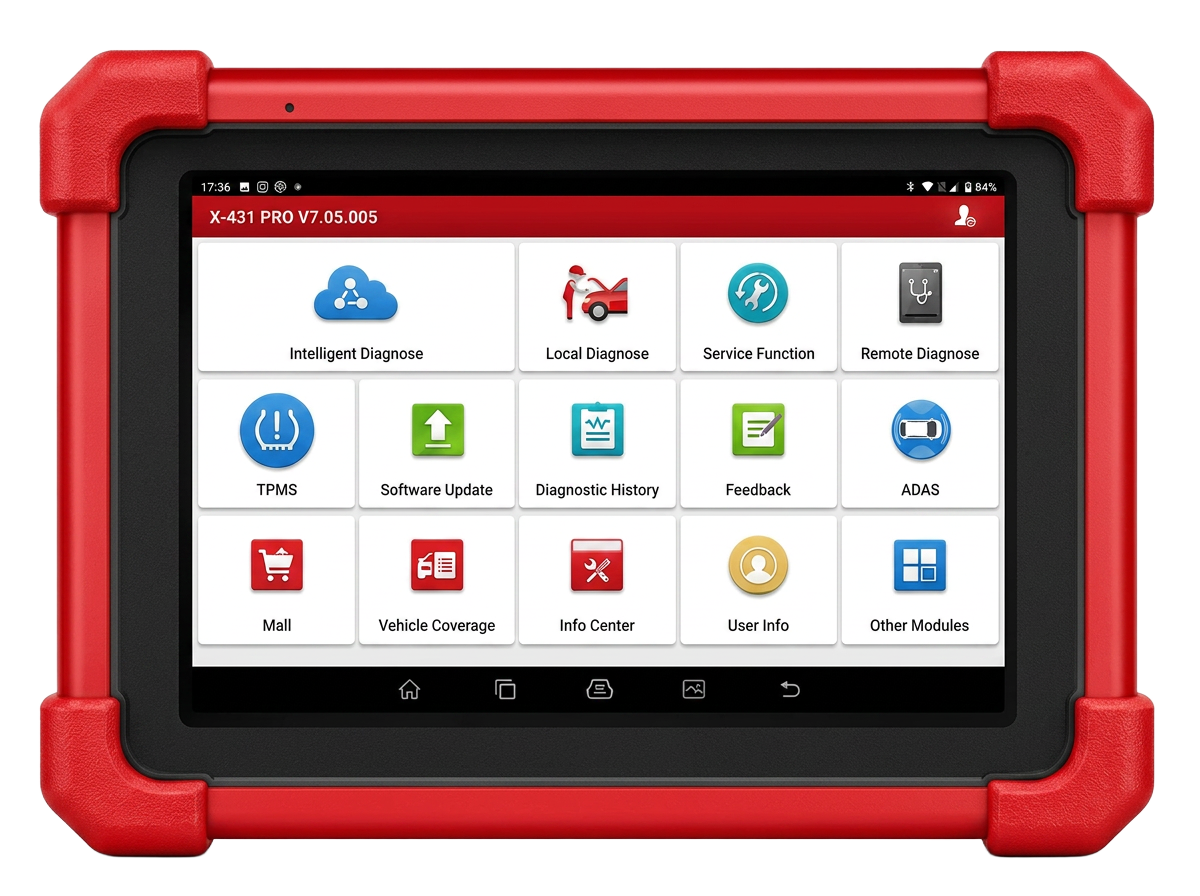
The Launch X431 Pro V5.0, available at MS Auto Tools for Rs 290,000, covers adaptation reset, ATF reset, and relearn procedures across Toyota, Honda, Hyundai, Kia, Suzuki, and most European and Chinese brands sold in Pakistan. It has online coding, CAN FD and DoIP support for newer models, and full-system diagnostics, so one tool handles the scan, the reset, and the verification drive data. You can see it here: https://msautotools.com/product.php?slug=launch-x431-pro-v5
For smaller workshops that mainly service Japanese cars, the Autel MaxiCheck MX808S at Rs 148,000 and the Autel MaxiCheck MX900 at Rs 155,000 also support gearbox adaptation and ATF reset on most popular models, with the MX900 adding CAN FD and DoIP for 2023 and newer cars. Both are genuine, in stock at MS Auto Tools, and carry a proper warranty, which matters when the tool is earning you money every day.
Whatever you buy, confirm before paying that the tool supports adaptation reset for the specific cars your customers bring. A scanner that works on a Corolla may not support a Sportage, and the difference is in the software, not the hardware.
What Should You Charge for an ATF Reset and Adaptation Service?
In Pakistan in 2026, workshops typically charge Rs 3,000 to Rs 5,000 for the adaptation reset and relearn drive alone, when the customer supplies the fluid or the fluid was changed elsewhere. As a combined package with an ATF change, the total usually runs Rs 15,000 to Rs 25,000 depending on the car and the fluid quantity, with the reset procedure adding Rs 4,000 to Rs 6,000 to the bill.
The service costs you nothing in parts and under an hour of labour once your technician knows the procedure. If you do five of these a week at Rs 4,000, that is Rs 80,000 a month of almost pure margin from a single scanner function. It also brings customers back: a driver who feels their car shift like new will return for the next service and recommend you to others.
If your workshop needs a genuine scanner that handles gearbox adaptation properly, message MS Auto Tools on WhatsApp at +92 300 0678111. We will confirm which tool covers the cars you service most, share the current price, and arrange delivery anywhere in Pakistan.
Frequently Asked Questions
Does every automatic car need an adaptation reset after an ATF change?
Almost every modern automatic does, including CVTs. The manufacturer service procedure lists it as a required step. Skipping it is the most common reason shift quality feels worse after a fluid change, and the fix takes minutes with the right scanner.
How long does a gearbox relearn take?
The reset itself takes five to ten minutes. The relearn drive takes 20 to 40 minutes of mixed driving. Most cars complete the learning within 100 to 200 kilometres, but a proper forced relearn in the workshop gets the shift quality right before the customer collects the car.
Can resetting adaptations damage my gearbox?
No, when done correctly on a healthy gearbox. The reset only erases learned values and lets the TCU relearn them. It becomes a problem only if the gearbox already has worn clutches or a failing solenoid, because the reset can temporarily expose the wear. Always scan for fault codes before resetting.
Why does my car shift harshly only when cold?
Cold fluid is thicker, and the TCU uses different pressure maps for cold operation. If the learned values are old or the fluid is degraded, the cold shift is where the error shows first. An ATF change plus adaptation reset usually fixes cold harsh shifting on Corolla, Civic, Sportage and Tucson models.
Can a cheap OBD2 scanner do an ATF reset?
No. Basic OBD2 readers only read and clear engine fault codes. ATF reset and adaptation relearn are manufacturer special functions that need a professional scanner with transmission system access, such as the Launch X431 Pro V5.0 or the Autel MaxiCheck MX900.
How often should ATF be changed in Pakistan?
For most automatics in Pakistani driving conditions, every 40,000 to 60,000 kilometres. City driving with frequent stop-start traffic, high summer temperatures, and dusty conditions age fluid faster than highway driving. Always reset the ATF counter and adaptations at the same service.
Automatic gearbox adaptation and ATF reset are simple, profitable, and badly under-offered by workshops in Pakistan. The procedure needs no parts, takes under an hour, and solves a complaint that customers feel every time they drive. If your workshop is still sending customers away after an ATF change without a reset, you are leaving money on the table and risking a comeback complaint. Get the right scanner, learn the procedure, and add this service to your board this week.
For genuine Launch and Autel scanners with warranty and delivery across Pakistan, contact MS Auto Tools on WhatsApp at +92 300 0678111. Tell us which cars you service most and we will recommend the right tool, confirm the price, and help you get started.